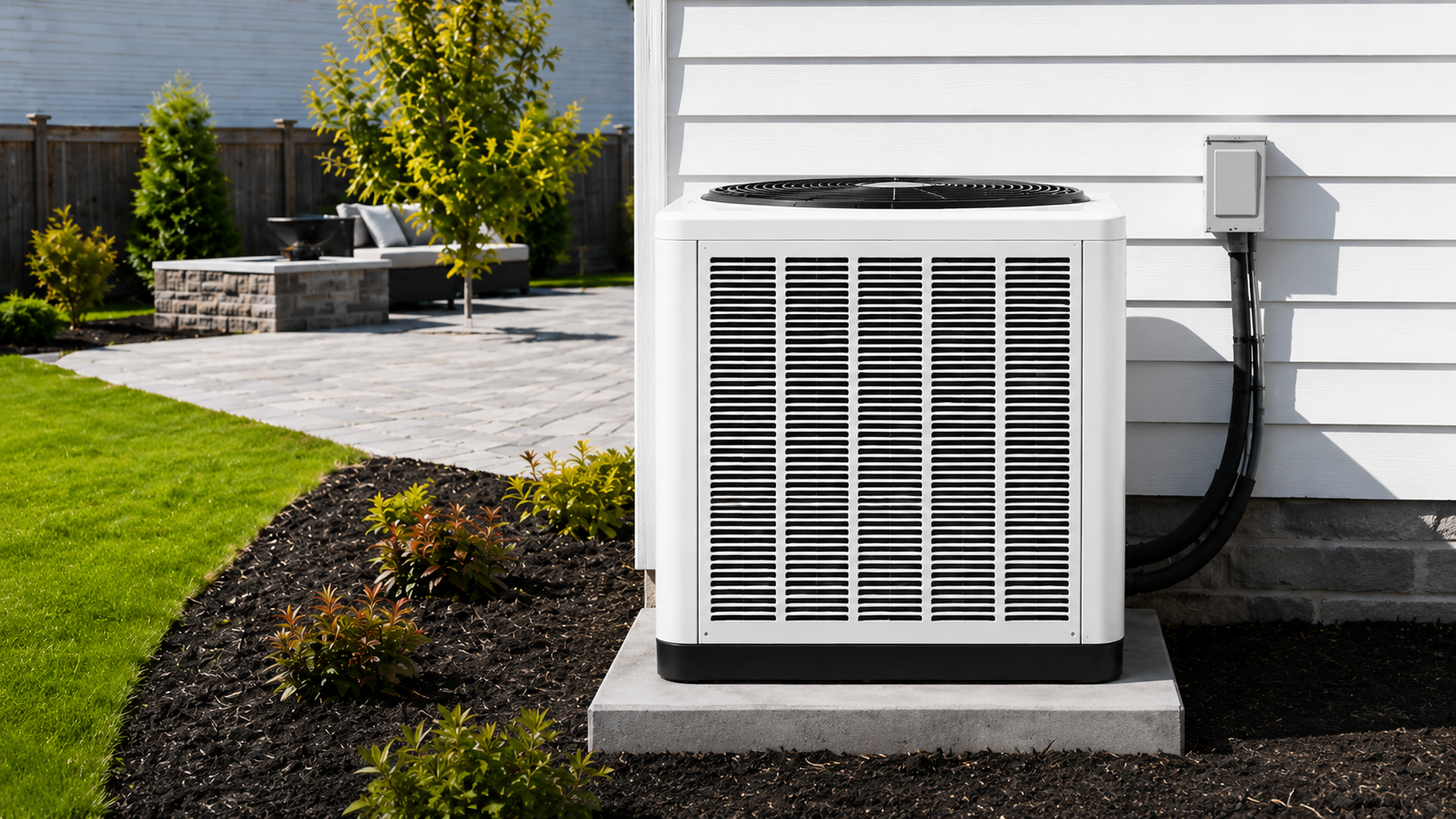
Refrigerant selection is no longer only a performance and cost decision. High-GWP HFC refrigerants are facing tighter policy pressure through global HFC phasedown commitments, the EU F-gas framework and U.S. Technology Transitions rules for refrigeration, air conditioning and heat pumps.[3][4][5] For HVAC/R OEMs, this means product platforms, refrigerant availability, service planning and long-term market access must be evaluated together.
R290 enters this discussion because it is a non-fluorinated refrigerant option with very low GWP. EPA's Technology Transitions GWP reference table lists R-290 (propane) with a GWP of 3.3 for rule implementation purposes.[2] It is not a universal replacement for every HVAC/R product, but it is increasingly relevant where the equipment architecture, refrigerant charge, installation environment and safety strategy can be designed around its characteristics.
What Is R290 Refrigerant?
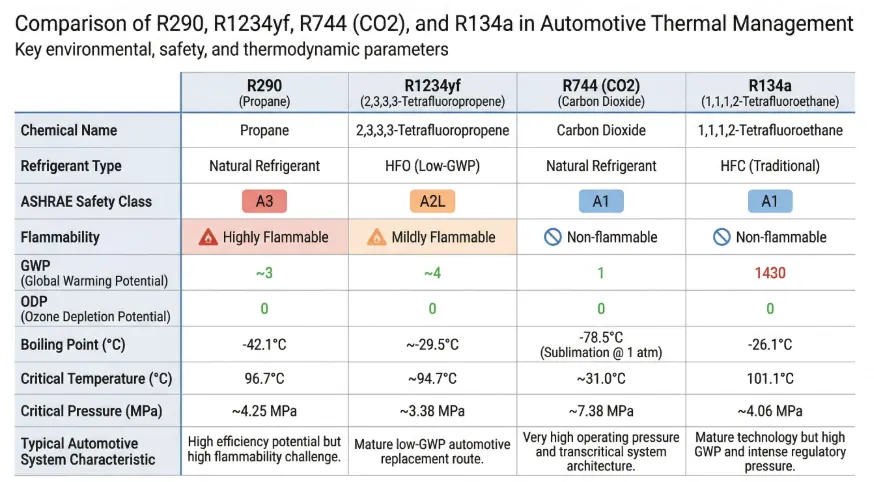
R290 is the refrigerant designation for propane. ASHRAE's refrigerant designation materials list number 290 as propane, and safety classifications under ANSI/ASHRAE Standard 34 are assigned based on toxicity and flammability data.[1] In HVAC/R use, R290 is commonly discussed as a natural hydrocarbon refrigerant, but its key engineering constraint is its A3 flammable classification.
| Item | R290 Refrigerant |
|---|---|
| Refrigerant name | Propane[1] |
| Refrigerant designation | R290[1] |
| Refrigerant type | Non-fluorinated hydrocarbon refrigerant |
| Fluorinated gas | No |
| GWP reference value | 3.3 in EPA's Technology Transitions GWP reference table[2] |
| Safety class | A3 under ASHRAE safety-classification practice[1] |
| Main consideration | Flammability requires safety-conscious system design |
Why Is the HVAC/R Industry Moving Toward Low-GWP Refrigerants?
Climate Regulations Are Changing Refrigerant Selection
The Kigali Amendment added HFC phasedown commitments to the Montreal Protocol framework, creating a global policy direction for reducing HFC production and consumption.[5] In Europe, the F-gas legislation framework continues to tighten controls on fluorinated greenhouse gases.[4] In the United States, EPA's Technology Transitions Program restricts the use of certain HFCs in sectors including refrigeration, air conditioning and heat pumps, and requires related labeling for covered RACHP products and equipment.[3]
HVAC/R Manufacturers Need Long-Term Refrigerant Strategies
For OEMs, refrigerant strategy is tied to product redesign cycles, component qualification, aftersales service, supply chain planning and market access. A compressor, heat exchanger, controller or sensor architecture that is suitable for one refrigerant may not transfer cleanly to another. This is why low-GWP strategy should be reviewed early in platform development rather than treated as a late-stage substitution exercise.
Heat Pumps Remain an Important Application Direction
Heat pumps remain a major application direction for electrified heating and cooling. IEA notes that most heat pumps currently use HFC refrigerants and that specialized maintenance, recycling and alternative refrigerants can reduce emissions from refrigerant leakage.[8] R290 is becoming an increasingly relevant option for selected heat pump applications, particularly where manufacturers are evaluating long-term low-GWP refrigerant strategies.
Where Is R290 Being Used in HVAC/R Equipment?
Heat Pumps
R290 is being evaluated in selected residential and commercial heat pumps, heat pump water heaters and industrial heat pump applications. These systems may face outdoor installation conditions, temperature variation, humidity, condensation and long service-life expectations. For OEMs, the refrigerant decision must connect with charge management, enclosure design, ventilation paths and fault-response logic.
Air-Conditioning Equipment
R290 can be relevant to selected portable, packaged and compact air-conditioning equipment where the system architecture is designed around a low-charge flammable refrigerant. Integration priorities include low power consumption, compact sensor placement, control-board connectivity, regional regulatory differences and serviceability.
Commercial Refrigeration
Commercial refrigeration includes supermarket display cases, beverage coolers, freezers, vending machines and stand-alone professional equipment. These products often run for long hours and may be exposed to condensation, oil contamination, dust and limited maintenance access. A leak detection strategy should therefore consider both response behavior and long-term drift performance.
Cold Rooms, Refrigerated Transport and Industrial Applications
Cold storage, refrigerated transport and industrial cooling equipment can add vibration, temperature fluctuation, dust, oil contamination, humidity and continuous operation to the design brief. These conditions make sensor robustness and mechanical integration as important as the nominal sensing principle.
The Core Challenge: R290 Has Environmental Benefits but Requires Safety-Conscious Design
R290 can be used effectively in HVAC/R applications when equipment design, refrigerant charge, installation conditions and safety measures are properly considered. The A3 classification does not mean R290 is unusable; it means flammability must be handled deliberately through system design, validation and application-specific risk assessment.[1]
Leak detection is one part of a broader safety strategy. Sensor placement, ventilation, control logic, electrical-load management, fault diagnostics and user/service instructions should be considered together. UL's materials on refrigerant detection systems describe refrigerant detection systems as part of mitigation strategies for flammable refrigerants in applicable equipment standards.[6][7]
Why Refrigerant Leak Detection Is Becoming an Important HVAC/R System Component
A refrigerant leak sensor is not merely a standalone alarm. In an OEM HVAC/R system, it can provide the control board with an input that supports mitigation behavior when the equipment design requires it. UL describes refrigerant detection systems as involving sensors and control logic electronics that support system response when refrigerant is detected.[6]

Any specific alarm threshold, LFL percentage, mitigation action or standard clause must be confirmed against the applicable product category, region and safety standard. UL's public materials discuss refrigerant detection system requirements and Annex LL updates in UL 60335-2-40, including system response concepts tied to lower flammability limit considerations.[6] OEM projects should verify the current standard text and certification pathway directly with the relevant testing body.
What HVAC/R OEMs Should Evaluate When Selecting an R290 Sensor
Different sensing principles may be suitable for different system requirements. HVAC/R OEMs should evaluate long-term stability, environmental robustness, integration requirements and lifecycle cost when selecting a solution.
| Evaluation Item | Why It Matters in HVAC/R Equipment |
|---|---|
| Response time | The sensor should detect rising refrigerant concentration early enough to support system-level mitigation. |
| Long-term stability | HVAC/R equipment may operate for many years, making drift performance important. |
| Factory calibration | Reduces field-maintenance complexity and improves consistency at installation. |
| Temperature resistance | Sensors may be exposed to large operating-temperature variations. |
| Humidity and condensation resistance | HVAC/R equipment frequently operates in demanding moisture conditions. |
| Cross-sensitivity | Reduced interference helps limit nuisance alarms. |
| Contamination resistance | Dust, oil and environmental contaminants may affect long-term performance. |
| Self-diagnostics | Supports fault recognition and system reliability. |
| Communication interface | Enables integration with the control board. |
| Mechanical integration | Sensor placement and enclosure design affect real-world performance. |
| Compliance strategy | Sensor and system design should be evaluated against applicable standards and regional requirements. |
R290 Sensors Are Evolving from Standalone Alarms to System-Level Safety Components
| Traditional Gas Alarm Approach | HVAC/R System-Level Sensor Approach |
|---|---|
| Standalone alarm output | Integrated control-board communication |
| Short-term sensitivity focus | Lifecycle stability and drift evaluation |
| Relatively simple installation environment | Temperature, humidity, condensation, oil and vibration challenges |
| Independent alarm device | Embedded OEM sensor module |
| Field maintenance may be acceptable | Factory calibration and reduced maintenance are increasingly important |
| Basic alarm signal | Fault diagnostics and system mitigation support |
Five Trends to Watch in the R290 HVAC/R Market
R290 Refrigerant Leak Detection for HVAC/R OEM Integration
As HVAC/R manufacturers evaluate R290 for heat pumps, air-conditioning systems and commercial refrigeration equipment, refrigerant leak detection is becoming an increasingly important part of system design.
MAXMAC develops factory-calibrated NDIR R290 refrigerant leak detection sensors for HVAC/R OEM integration. The solutions are designed to support long-term operation in demanding environments, including applications where temperature variation, humidity, condensation and continuous operation must be considered.
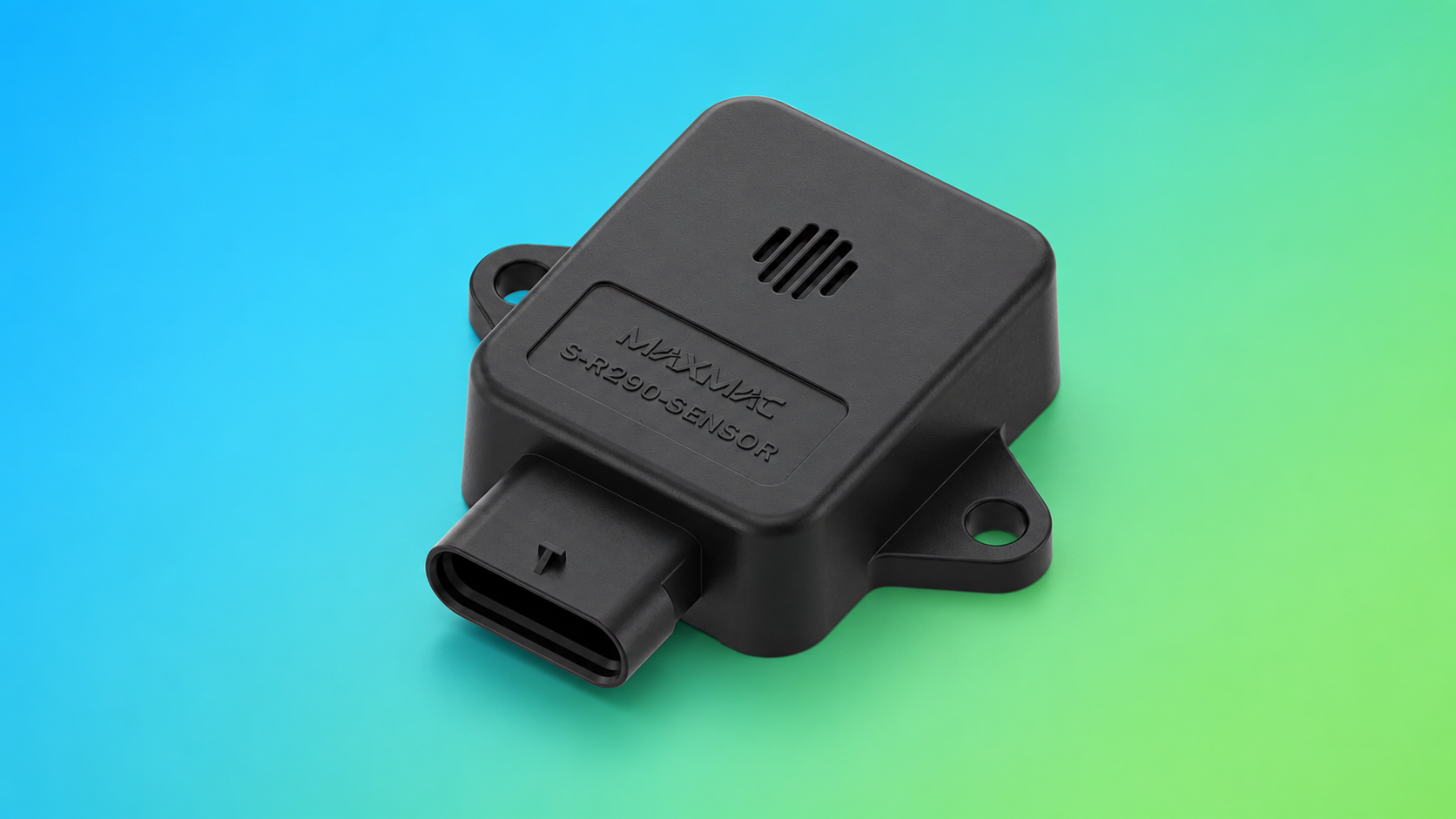
Solution:R290 refrigerant leak detection sensors for HVAC/R
Explore R290 Sensors for HVAC/R
Frequently Asked Questions About R290 in HVAC/R Equipment
What is R290 refrigerant?
R290 is the refrigerant designation for propane. It is a non-fluorinated hydrocarbon refrigerant with very low global warming potential and an A3 safety classification.[1][2]
Is R290 the same as propane?
Yes. In refrigerant nomenclature, R290 refers to propane used as a refrigerant.[1]
Why is R290 used in HVAC/R equipment?
R290 is considered in selected HVAC/R equipment because it is non-fluorinated, has very low GWP and has useful thermodynamic properties for refrigeration and heat-pump cycles.
Is R290 a low-GWP refrigerant?
Yes. EPA's Technology Transitions GWP reference table lists R-290 (propane) with a GWP of 3.3 for rule implementation purposes.[2]
Why does R290 require safety-conscious HVAC/R equipment design?
R290 is an A3 refrigerant, so flammability must be considered through system-level design, refrigerant charge strategy, sensor placement, ventilation, control logic and applicable safety standards.[1][6]
Where is R290 commonly used in HVAC/R applications?
R290 is used or evaluated in selected heat pumps, air-conditioning equipment, commercial refrigeration, cold rooms, cold-chain equipment and industrial cooling applications.
Why is refrigerant leak detection important for R290 HVAC/R systems?
Leak detection helps the control system identify rising refrigerant concentration and trigger mitigation actions such as ventilation, load management, alarms or fault reporting when required by the equipment design.[6][7]
What should OEMs evaluate when selecting an R290 sensor?
OEMs should evaluate response time, long-term stability, factory calibration, temperature and humidity robustness, cross-sensitivity, contamination resistance, self-diagnostics, communication interface and mechanical integration.
Can R290 sensors be integrated with HVAC/R control boards?
Yes. R290 sensors can be integrated with HVAC/R control boards through appropriate signal or communication interfaces so detection data can support system response logic.
Will R290 replace every refrigerant used in HVAC/R equipment?
No. Refrigerant strategies vary by region, product category, charge size, safety requirements and regulatory conditions. R290 is becoming an important option for selected applications, but multiple refrigerant routes will continue to coexist.
Conclusion
The HVAC/R industry is moving toward lower-GWP refrigerant strategies, and R290 is becoming an increasingly relevant option for selected applications. Its environmental profile is attractive, but A3 flammability requires safety-conscious equipment design. For OEMs, leak detection should be treated as a system-level component connected to sensor placement, ventilation, control logic, diagnostics and lifecycle reliability.
Teams evaluating R290 should review sensor reliability, environmental robustness, lifecycle performance and integration requirements early in the design process. For OEMs ready to evaluate R290 leak detection, MAXMAC's HVAC/R solution page provides the next technical entry point.
References
References are listed in the order they first appear. External links open in a new tab.
- ASHRAE, ASHRAE Refrigerant Designations. https://www.ashrae.org/technical-resources/standards-and-guidelines/ashrae-refrigerant-designations
- U.S. EPA, Technology Transitions GWP Reference Table. https://www.epa.gov/hfcs/technology-transitions-gwp-reference-table
- U.S. EPA, Technology Transitions Program. https://www.epa.gov/hfcs/technology-transitions-program
- European Commission, F-gas legislation. https://climate.ec.europa.eu/eu-action/fluorinated-greenhouse-gases/f-gas-legislation_en
- UNEP, The Kigali Amendment to the Montreal Protocol: HFC Phase-down. https://wedocs.unep.org/handle/20.500.11822/26589
- UL Solutions, Updated Requirements for Refrigerant Detection Systems. https://www.ul.com/insights/updated-requirements-refrigerant-detection-systems
- UL Solutions, Refrigerant Detection Systems. https://www.ul.com/resources/refrigerant-detection-systems
- International Energy Agency, Heat Pumps. https://www.iea.org/reports/heat-pumps

