

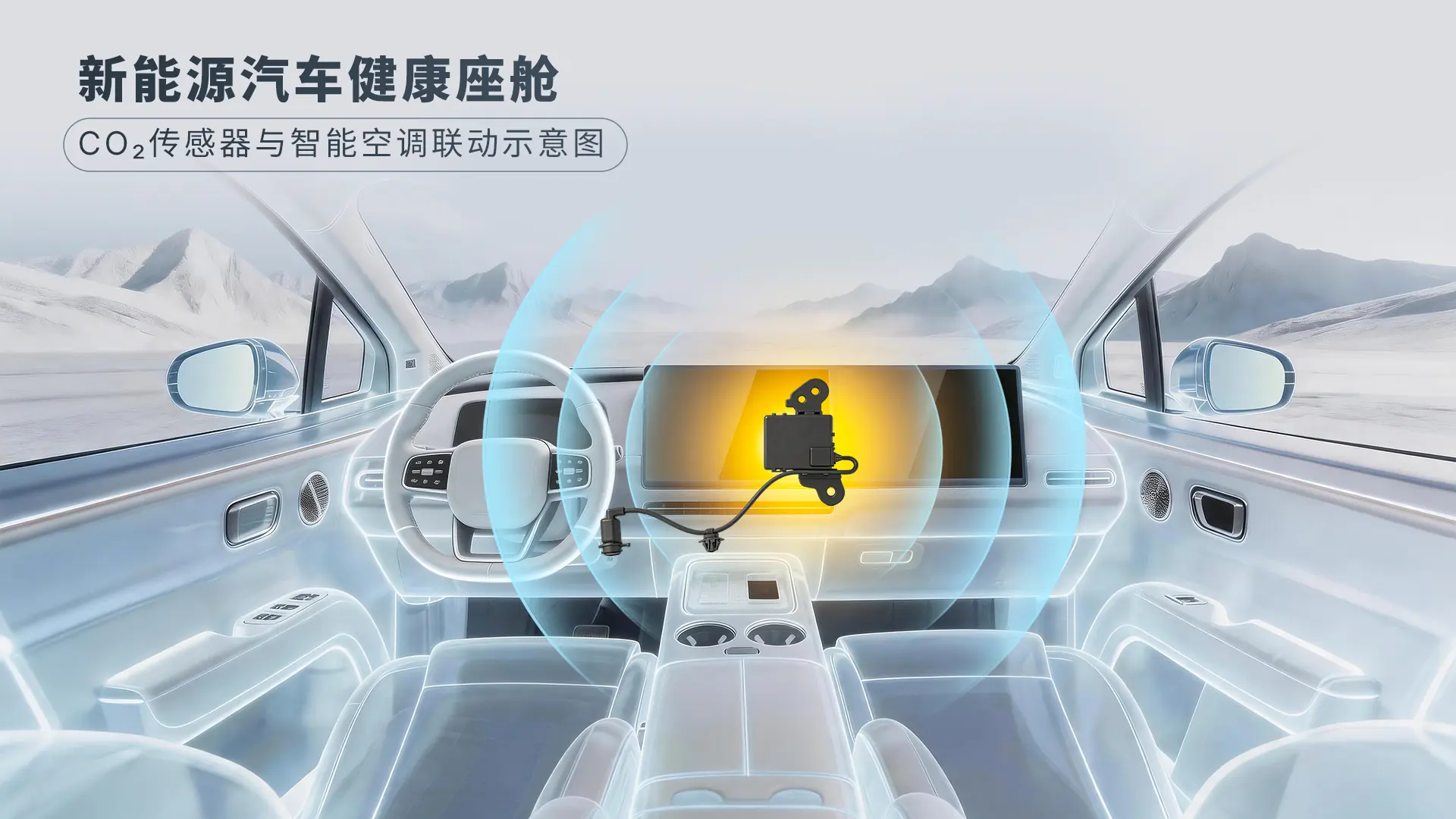
In the past, in-cabin air management mainly focused on PM2.5, odors, TVOC, formaldehyde, and filter grades. In the last two years, CO2 monitoring has been adopted by more OEMs in smart cabins and thermal management systems. Li Auto is a typical example: public information shows that the 2024 Li L series added CO2 sensors and negative ion generators; a 2025 explanation of the Li i8 healthy cabin stated that the vehicle carries CO2 and PM2.5 sensors and that Li Auto has made CO2 sensors standard across its lineup.[1][2][3]
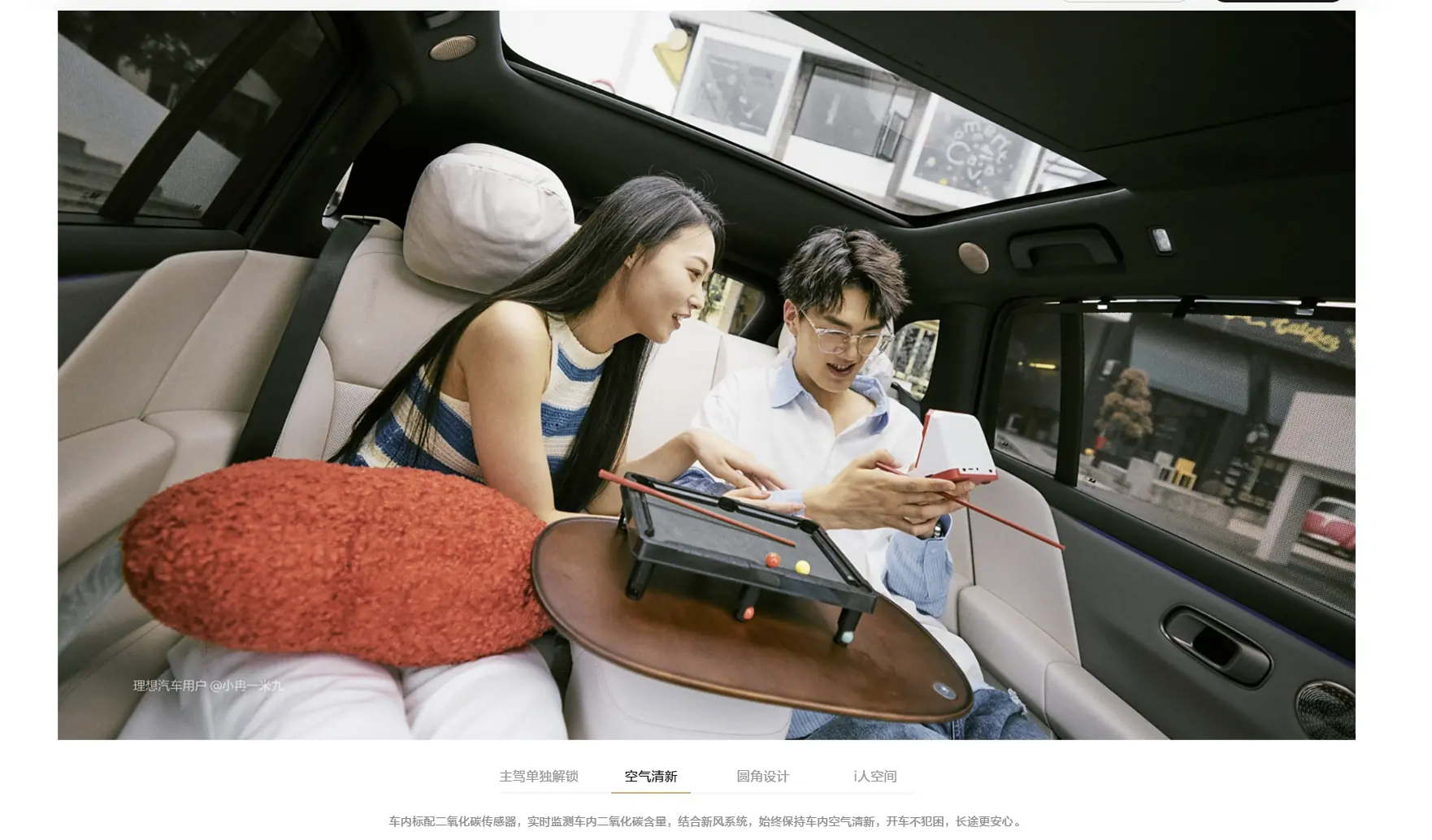
Why does a vehicle cabin need a CO2 sensor?
CO2 comes from human breathing. Exhaled air contains about 4% CO2, roughly equal to 40,000 ppm, while outdoor air is usually around 400 ppm. A vehicle cabin is much smaller than a home, office, or meeting room. When windows are closed, the air conditioner is in recirculation mode, and passenger count increases, CO2 can accumulate quickly. So what does rising CO2 mean for the human body?
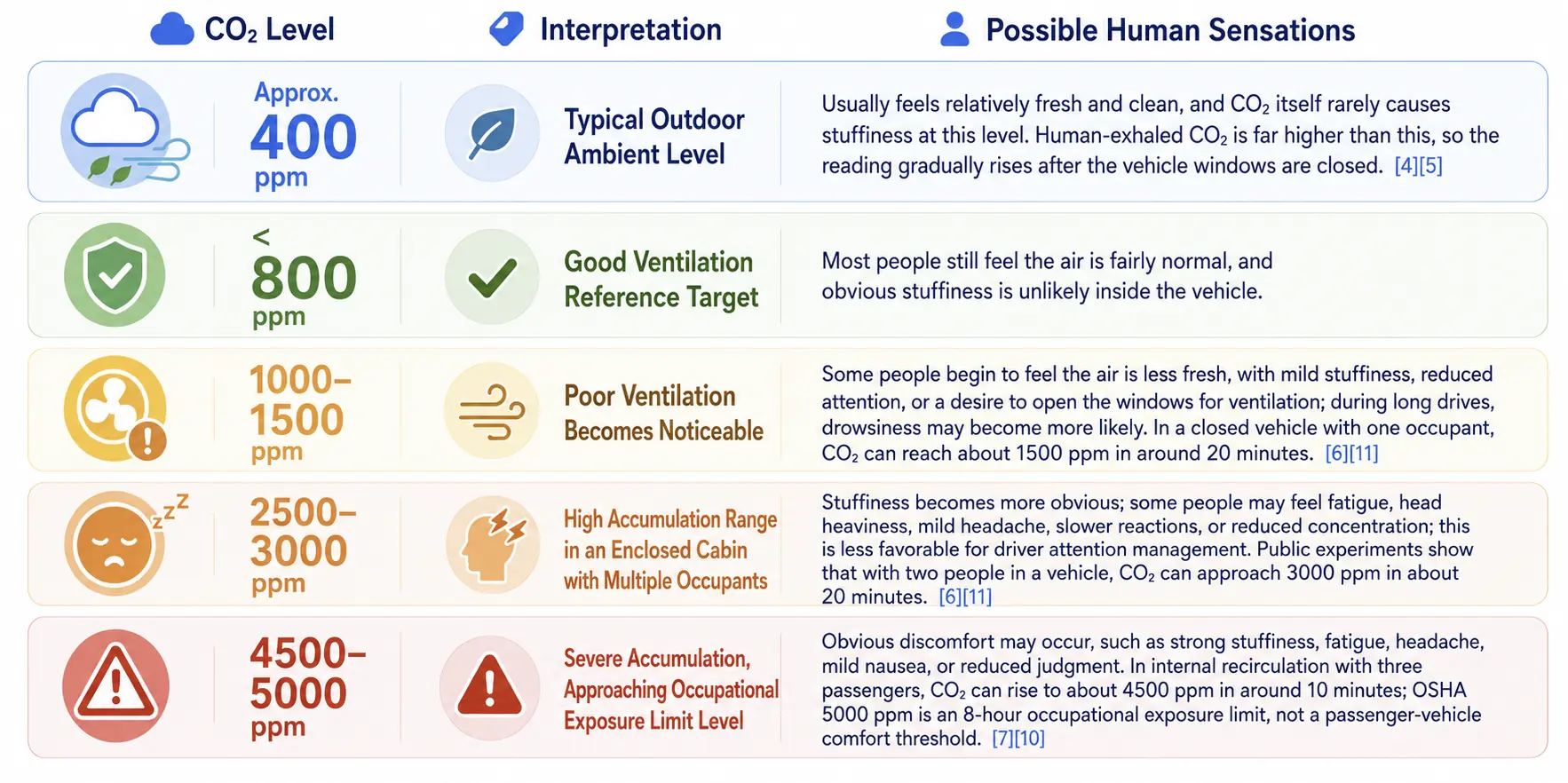
Several in-vehicle air studies show that cabin CO2 rises very quickly. A light passenger vehicle experiment by the University of the Sunshine Coast found that CO2 can reach about 1500 ppm within roughly 20 minutes with one person, and approach 3000 ppm with two people. Another study reported that with three occupants in recirculation, CO2 can rise to about 4500 ppm in roughly 10 minutes. A study on in-vehicle air-quality perception also noted that under recirculation, cabin CO2 may rise from 1000 ppm to 5000 ppm depending on time and occupant count.[6][7][8]
| Scenario / Indicator | Public data or research conclusion | Meaning for cabin control |
|---|---|---|
| Human breathing source | Exhaled air contains about 4% CO2, roughly 40,000 ppm.[4][5] | More occupants and longer stays make cabin CO2 accumulation more obvious. |
| One person in the cabin | CO2 can reach 1500 ppm within about 20 minutes.[6] | Even a single driver needs monitoring and ventilation during long closed-window recirculation. |
| Two people in the cabin | CO2 can approach 3000 ppm within about 20 minutes.[6] | Family and multi-passenger use needs active fresh-air control. |
| Three people in recirculation | CO2 can rise to 4500 ppm in about 10 minutes.[7] | Manual switching alone is unlikely to respond in time. |
| Ventilation reference | CDC/NIOSH notes that below 800 ppm can be a reference target for good ventilation.[9] | Cabin thresholds need to consider space, occupants, outside air quality, and driving safety. |
Higher CO2 concentration affects driving and riding comfort as well as perceived safety. CDC/NIOSH treats CO2 monitoring as a tool for assessing ventilation and notes that below 800 ppm can be a reference target for good ventilation, while OSHA's 5000 ppm limit is an occupational exposure value rather than a passenger-car comfort threshold.[9][10]
CO2 sensors solve the recirculation paradox
Recirculation can reduce road particles, exhaust, and odors entering the cabin and can lower HVAC energy consumption. But it also reduces fresh-air exchange, allowing occupants' exhaled CO2 to accumulate. Outside air can reduce CO2, but may bring smog, tunnel pollution, exhaust, and odors into the vehicle. Manual switching alone cannot balance health, comfort, energy, and safety.
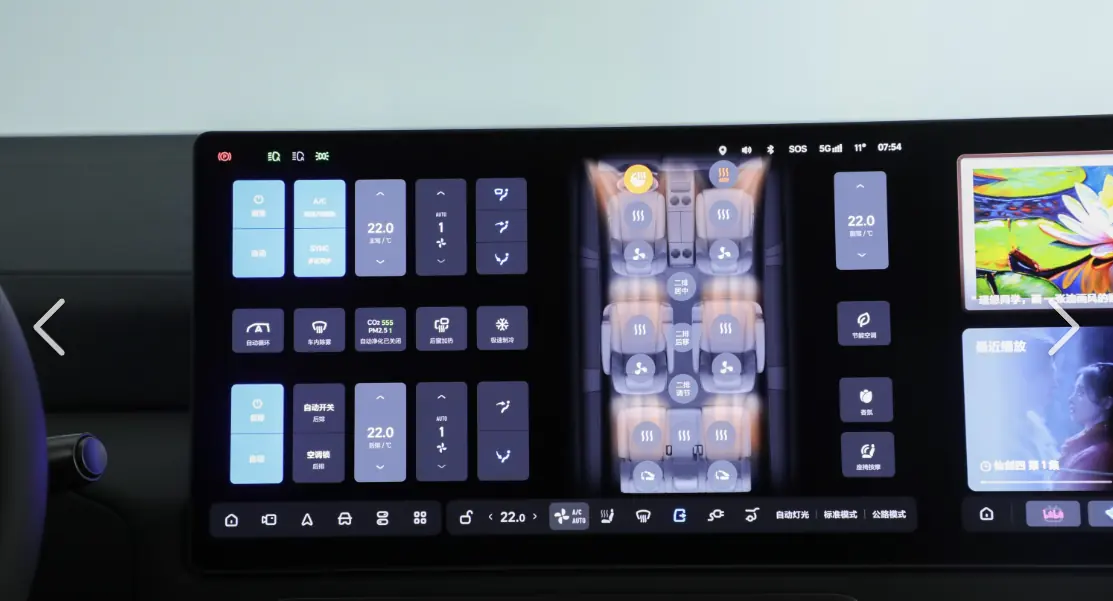
The CO2 sensor provides real-time input to intelligent HVAC. PM2.5 and AQS sensors judge outside air quality, the CO2 sensor judges whether the cabin is becoming stuffy, and temperature, humidity, and anti-fog sensors judge fogging risk. The HVAC controller then decides fresh-air ratio, recirculation mode, airflow, and filtration strategy.[1][13][14]
Why is Li Auto increasing CO2 sensor adoption?
Li Auto has long positioned its products around family users, multi-passenger travel, and long-distance scenarios. Its 2024 annual report describes the L9 and L8 as six-seat family SUVs, the L7 as a five-seat family SUV, and the L6 as a five-seat premium SUV.[15]

In public explanations, Li Auto places the CO2 sensor within its healthy-cabin framework. When CO2 becomes too high, the driver is more likely to feel sleepy; the Li i8 uses a CO2 sensor to identify concentration changes and links with the HVAC system to switch to outside air, ventilate in time, reduce CO2 concentration, and reduce stuffiness.[1]
Li Auto's official L6 technical article also discloses more specific logic. In winter, the dual-layer flow air conditioner introduces dry outside air in the upper layer to reduce cabin CO2 and window fogging risk, while using warmer recirculated air in the lower layer to reduce heating energy consumption.[13]
| Adoption goal | User scenario | System value |
|---|---|---|
| Reduce stuffiness and sleepiness | Full-family travel, highway trips, children and elderly passengers | Trigger ventilation through CO2 monitoring to improve long closed-cabin use. |
| Support healthy-cabin closed loop | PM2.5, AQS, CN95 filter, negative ion generator | Upgrade purification features into multi-sensor coordinated control. |
| Balance winter energy and defogging | Winter heating, low-temperature range, window fogging risk | Use fresh-air ratio and dual-layer flow control to balance health, comfort, and energy use. |
This shows three core goals: reducing stuffiness and sleepiness during full-family and long-distance travel; supporting a closed loop among PM2.5, AQS, CN95 filters, negative ion generators, and intelligent HVAC; and balancing health, defogging, and energy use in winter EV scenarios.
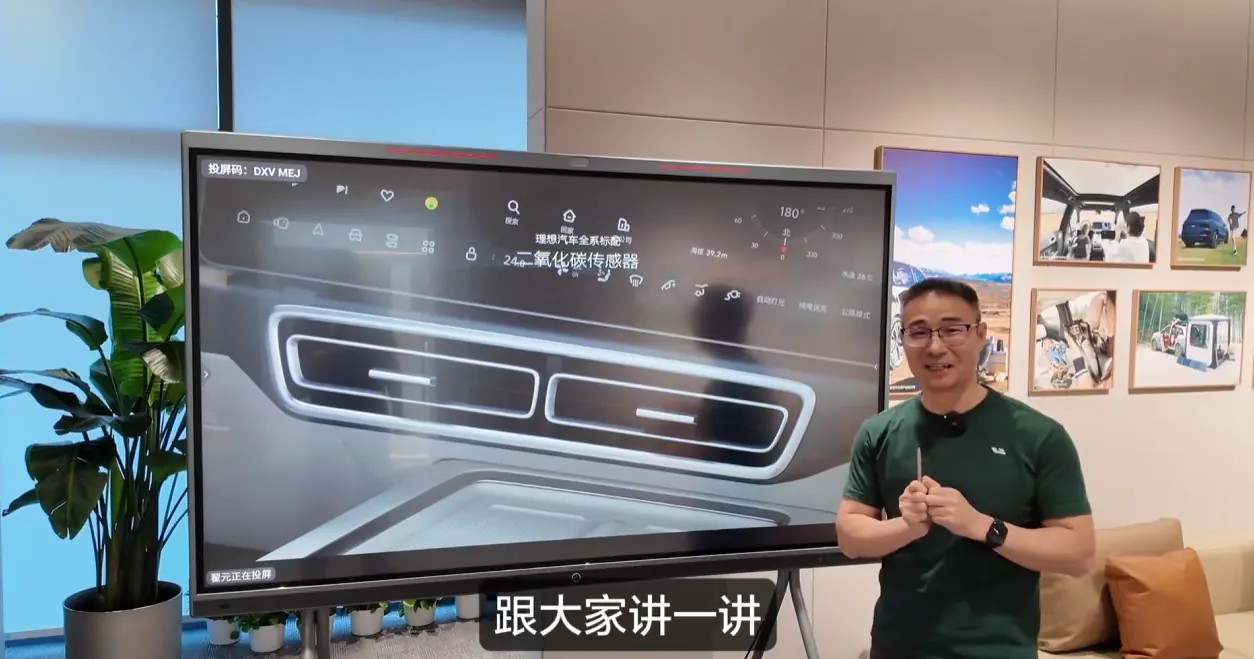
Where can CO2 sensors land in family-use scenarios?
| Family scenario | Typical problem | CO2 sensor value |
|---|---|---|
| Full-occupancy long trips | More occupants, closed windows, and long HVAC operation make CO2 rise faster. | Trigger outside air or increase fresh-air ratio to reduce CO2, sleepiness, and stuffiness.[6][7][14] |
| Urban congestion, tunnels, elevated roads | Outside particles, exhaust, and odors increase; recirculation helps isolate pollution. | Provide ventilation-status data so the system can balance outside pollution and in-cabin CO2.[7][12] |
| Winter heating | Outside air lowers CO2 and fogging but increases heating energy. | Combine temperature, humidity, and CO2 data to balance energy saving, defogging, and fresh air.[13] |
| Children, elderly passengers, pets | Family users are more sensitive to comfort, ventilation reminders, and remote HVAC. | CO2 can be an important input for alerts, ventilation, and remote climate management.[1][15] |
Industry trend: CO2 is moving from premium feature to basic healthy-cabin sensor
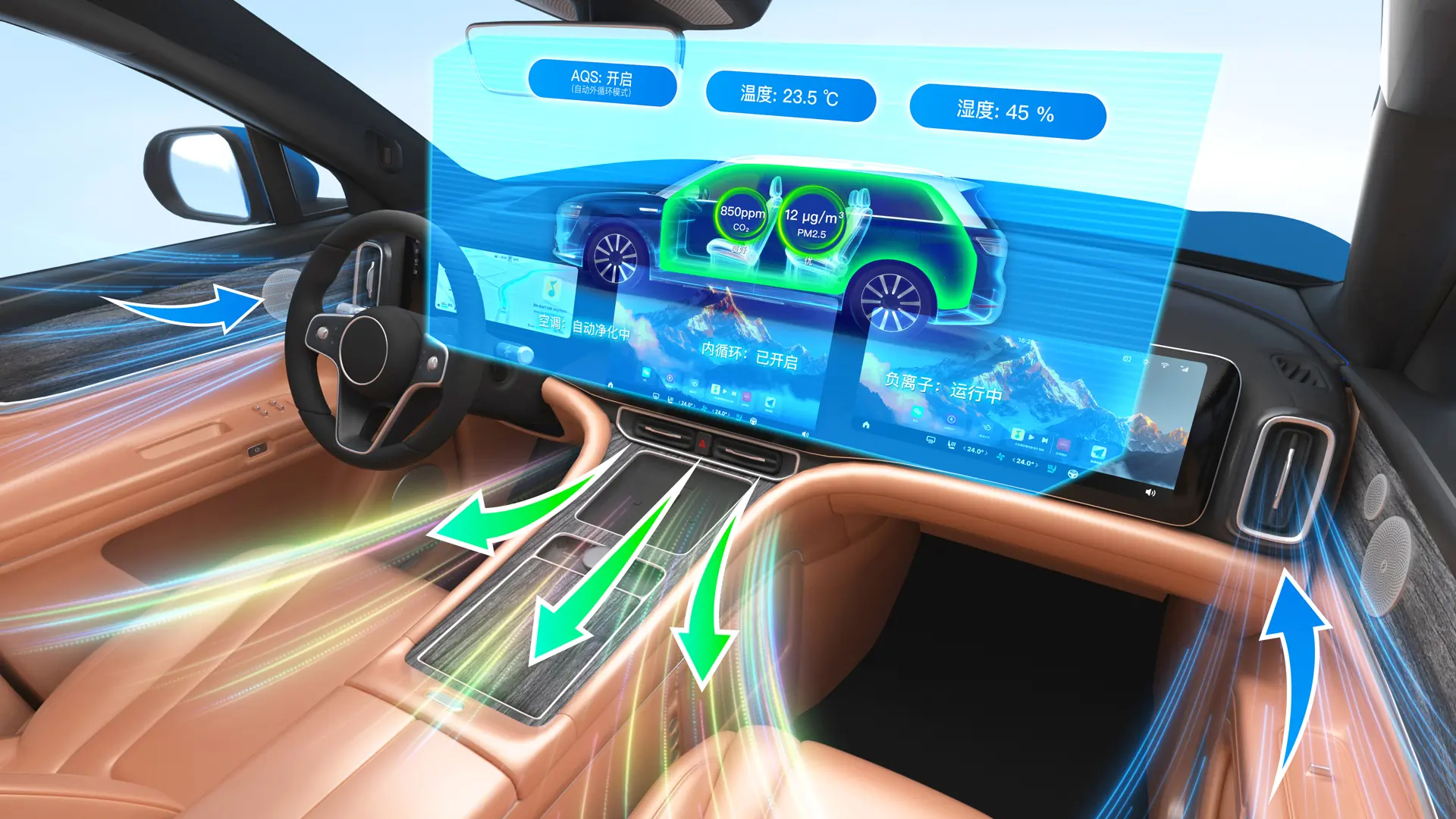
The supply chain already shows a clear direction. Sensirion Automotive has released CO2 sensor products for vehicle HVAC, emphasizing continuous in-cabin CO2 measurement, recirculation optimization, and potential R744 refrigerant leakage safety monitoring. Amphenol Telaire also provides an internal CO2 sensor module for automotive applications.[14][16][17]
On the OEM side, Li Auto connects CO2 sensors with family scenarios, intelligent fresh air, PM2.5 purification, dual-layer air conditioning, and energy-saving control across the L series, L6, MEGA, and i8. Buick's new energy flagship MPV also presents a health-cabin concept that uses active ventilation to control CO2 concentration and reduce fatigue during long-distance driving.[18]
Our product value: automotive-grade CO2 sensors for OEM family scenarios
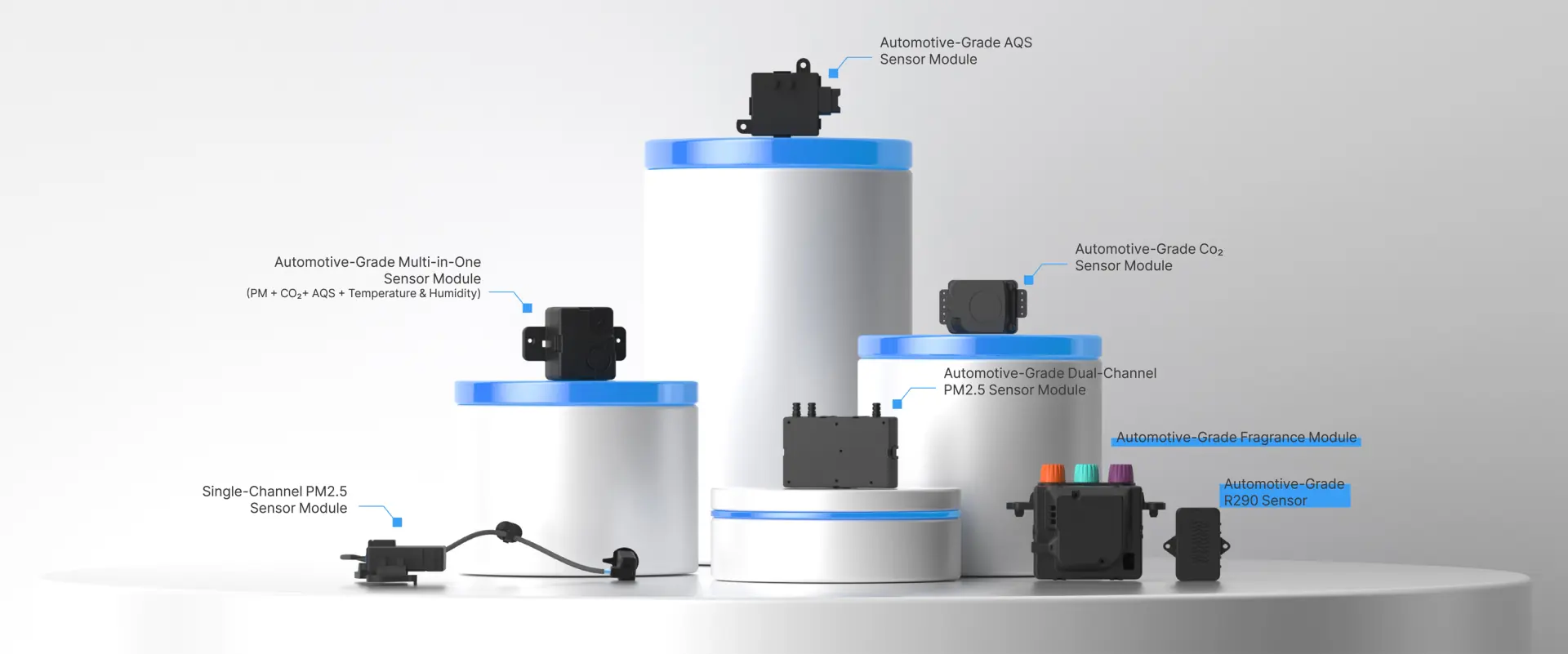
To meet OEM requirements for reliability, integration, and mass-production consistency, MAXMAC provides automotive-grade CO2 sensors for intelligent HVAC, healthy cabins, fresh-air control, recirculation control, dual-layer air conditioning, defogging, energy saving, and full-family travel.
The product provides real-time CO2 concentration monitoring and delivers air-quality input to the OEM HVAC controller, helping vehicles achieve more refined control among pollution isolation, CO2 reduction, winter defogging, energy saving, and multi-passenger long-distance ventilation.
As brands such as Li Auto raise CO2 sensor adoption, CO2 sensors are becoming key components of family healthy cabins. For OEMs, the value has expanded from showing a number to driving HVAC strategy with real cabin data. For families, the delivered experience is less stuffiness on long trips, less sleepiness with full occupancy, greater confidence for children and elderly passengers, and more efficient winter climate control.
References
Public facts are marked with reference numbers. Product-value sections are application interpretations based on public trends and MAXMAC product direction.
- Sina News repost of Li Auto i8 healthy cabin QA.
https://www.sina.cn/news/detail/5196268693361322.html - Xcar, 2024 Li MEGA & L series launch information.
https://aikahao.xcar.com.cn/item/1998477.html - Debon Securities report on 2024 Li Auto L series safety and health upgrades.
https://pdf.dfcfw.com/pdf/H3_AP202407211638148015_1.pdf - PMC paper on CO2 in exhaled air.
https://pmc.ncbi.nlm.nih.gov/articles/PMC6865105/ - EPA Science Inventory, exhaled CO2 is usually about 4% to 5%.
https://cfpub.epa.gov/si/si_public_record_report.cfm?dirEntryId=41978 - University of the Sunshine Coast, light passenger vehicle CO2 experiment.
https://research.usc.edu.au/esploro/outputs/conferencePaper/Experimental-Study-on-Cabin-Carbon-Dioxide/99495708302621 - ScienceDirect / Atmospheric Environment, CO2 accumulation under vehicle recirculation.
https://www.sciencedirect.com/science/article/pii/S1352231017302522 - MDPI Sustainability, in-vehicle air quality perception study.
https://www.mdpi.com/2071-1050/8/9/852 - CDC/NIOSH Ventilation FAQ.
https://www.cdc.gov/niosh/ventilation/faq/index.html - OSHA Chemical Data, CO2 PEL-TWA 5000 ppm.
https://www.osha.gov/chemicaldata/183 - Time report on recirculation and in-car CO2 accumulation.
https://time.com/5655400/traffic-air-pollution/ - ScienceDirect, vehicle recirculation reduces particulate entry while increasing CO2.
https://www.sciencedirect.com/science/article/pii/S0048969717321034 - Li Auto community article on L6 dual-layer flow air conditioning and CO2 control.
https://www.lixiang.com/community/detail/article/1239600.html - Sensirion Automotive, vehicle CO2 sensor for cabin monitoring and recirculation optimization.
https://sensirion-automotive.com/cn/products/co2-sensor - Li Auto 2024 Annual Report.
https://ir.lixiang.com/system/files-encrypted/nasdaq_kms/assets/2025/04/10/6-39-06/2024%20Annual%20Report.pdf - Sensirion Automotive news on CO2 sensors, comfort, safety, and R744 leakage monitoring.
https://sensirion-automotive.com/company/news/press-releases-and-news/article/advancing-automotive-safety-and-comfort-the-role-of-co2-sensors - Amphenol Telaire T6743 internal CO2 sensor for automotive applications.
https://amphenol-sensors.com/en/telaire/co2/525-co2-sensor-modules/3388-t6743 - Autohome article on Buick's health cabin and CO2 control.
https://chejiahao.autohome.com.cn/info/24198858
_美图抠图12-12-2025.webp)