Cabin air management has become a standard part of the modern vehicle experience. Many vehicles already use a PM2.5 sensor to check whether outside air is dirty, and the HVAC system can switch to recirculation when particles, exhaust or odor risks rise. That logic is easy to understand: if the air outside is poor, keep it out; when conditions recover, bring outside air back in.
The question is what happens during a long recirculation period. Cabin air keeps changing as people breathe. CO2 is continuously released into a closed, relatively small space. Recirculation can reduce pollution intake, while fresh-air exchange decreases. This creates the recirculation paradox: the cabin can look cleaner by PM2.5, while the air becomes less fresh.
The First Side of Recirculation: Keeping Outdoor Pollution Out
Recirculation is an important protection layer. In city driving, external air quality can change quickly. Tailpipe exhaust, tunnel pollution and poorly ventilated underground garages can push particles and odors up within a short time. If the HVAC system keeps drawing in that air, pollutants enter the cabin continuously, increasing filter load and degrading the breathing experience.
This is where PM2.5 and AQS sensors matter. PM2.5 sensing tracks particles. AQS/VOC-type sensing tracks exhaust gases and odor-related pollutants. Together they help the vehicle decide whether outside air is suitable for intake.
The limitation is equally clear. PM2.5 can answer whether particle levels are high. It cannot answer whether the cabin has enough fresh air.
The Second Side of Recirculation: Trapping CO2 in the Cabin
The source of CO2 is simple: occupant breathing. Exhaled air contains far more CO2 than outdoor air, and a vehicle cabin is much smaller than a home, office or meeting room. With windows closed, recirculation active, more occupants inside or a longer parked stay, CO2 can rise quickly. The process has no obvious smell, so users rarely notice it directly.
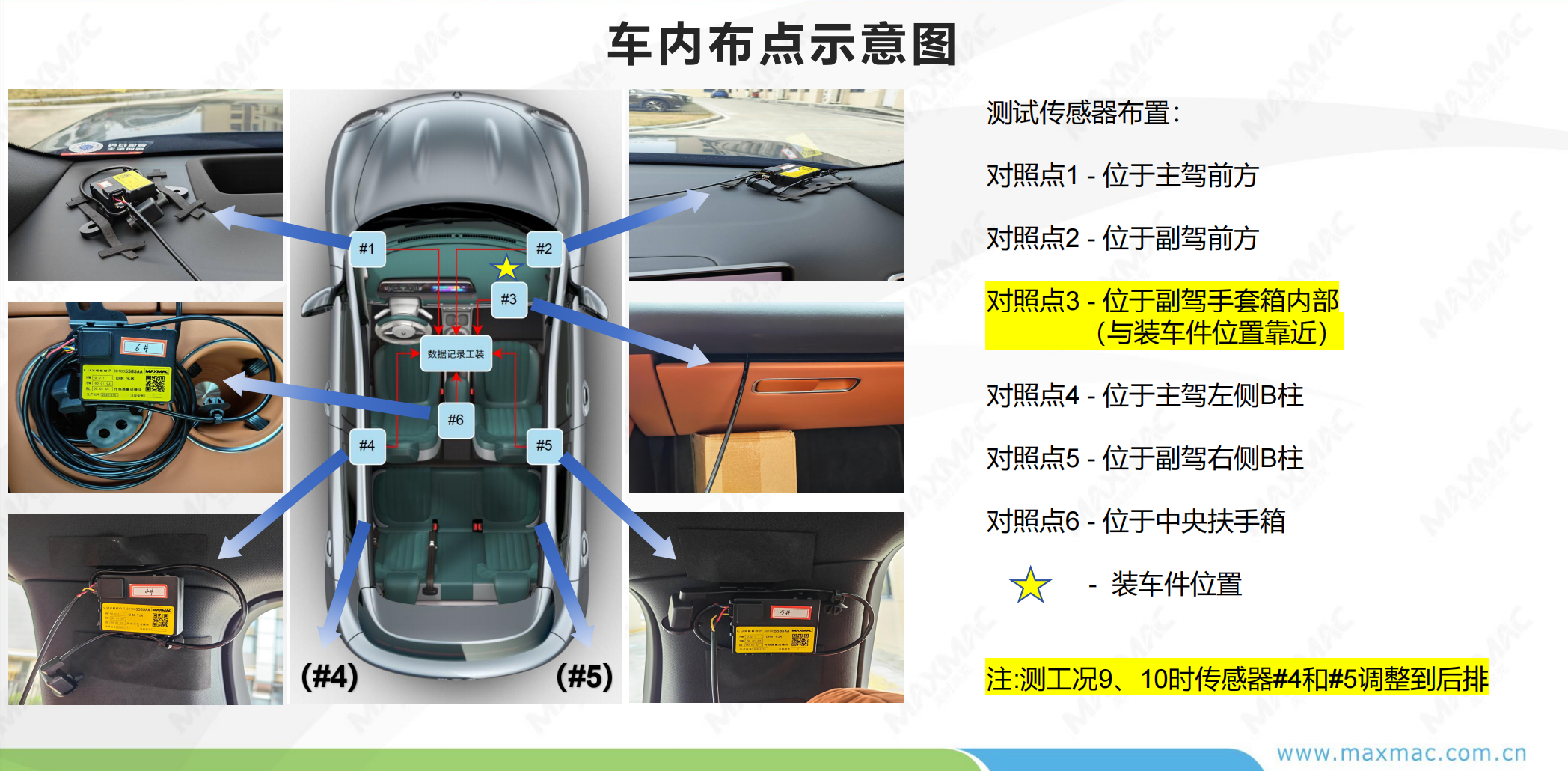
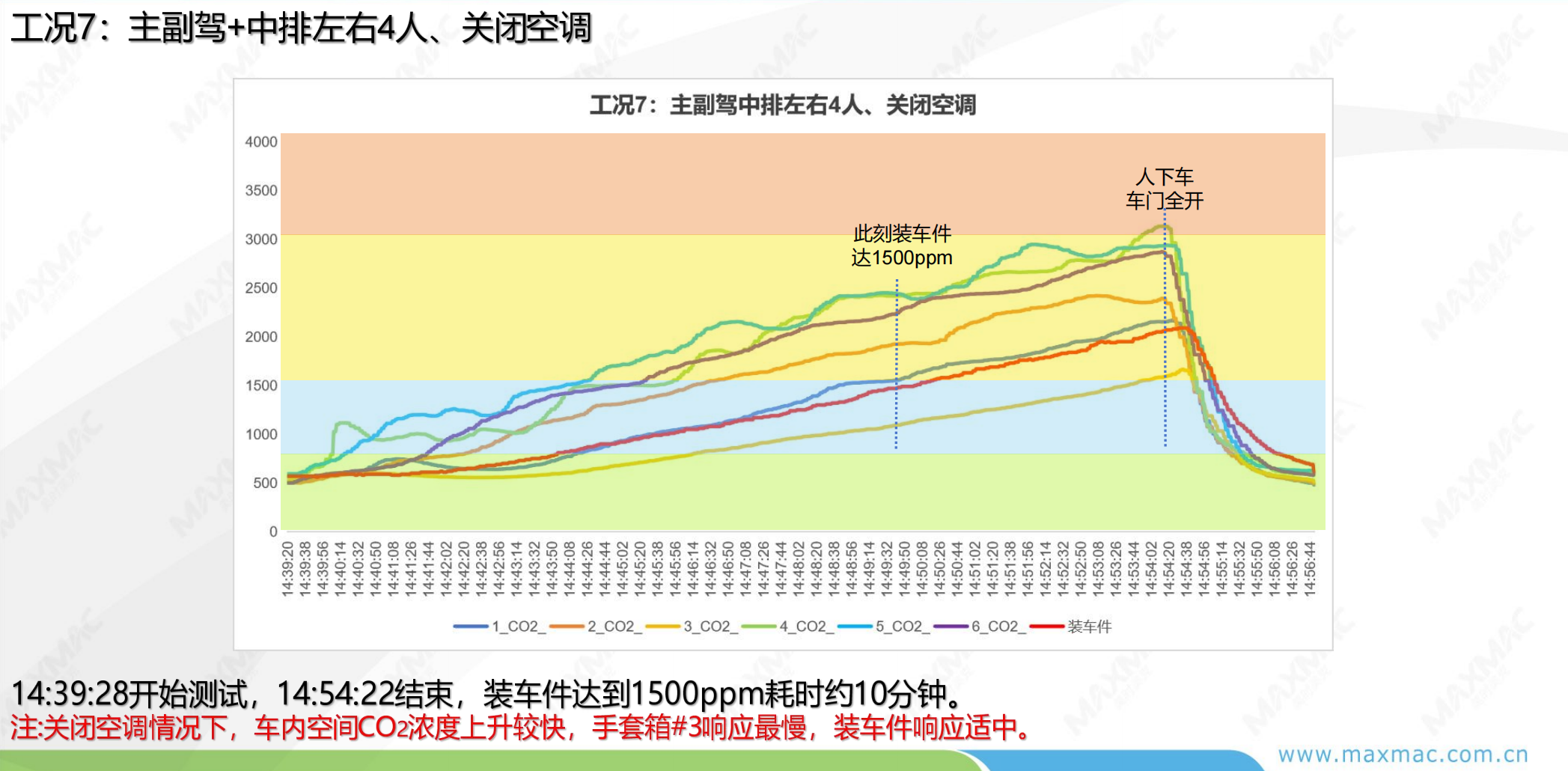
We carried out an in-vehicle comparison test using multiple CO2 sensing points. The test date was 2026-02-27. The installed sensor was positioned near the glove-box area on the front passenger side. Conditions covered 1, 2, 3 and 4 occupants, front and rear seating layouts, and HVAC-off versus recirculation level 1. The purpose was to observe how fast cabin CO2 accumulated under closed-loop air circulation.[1]
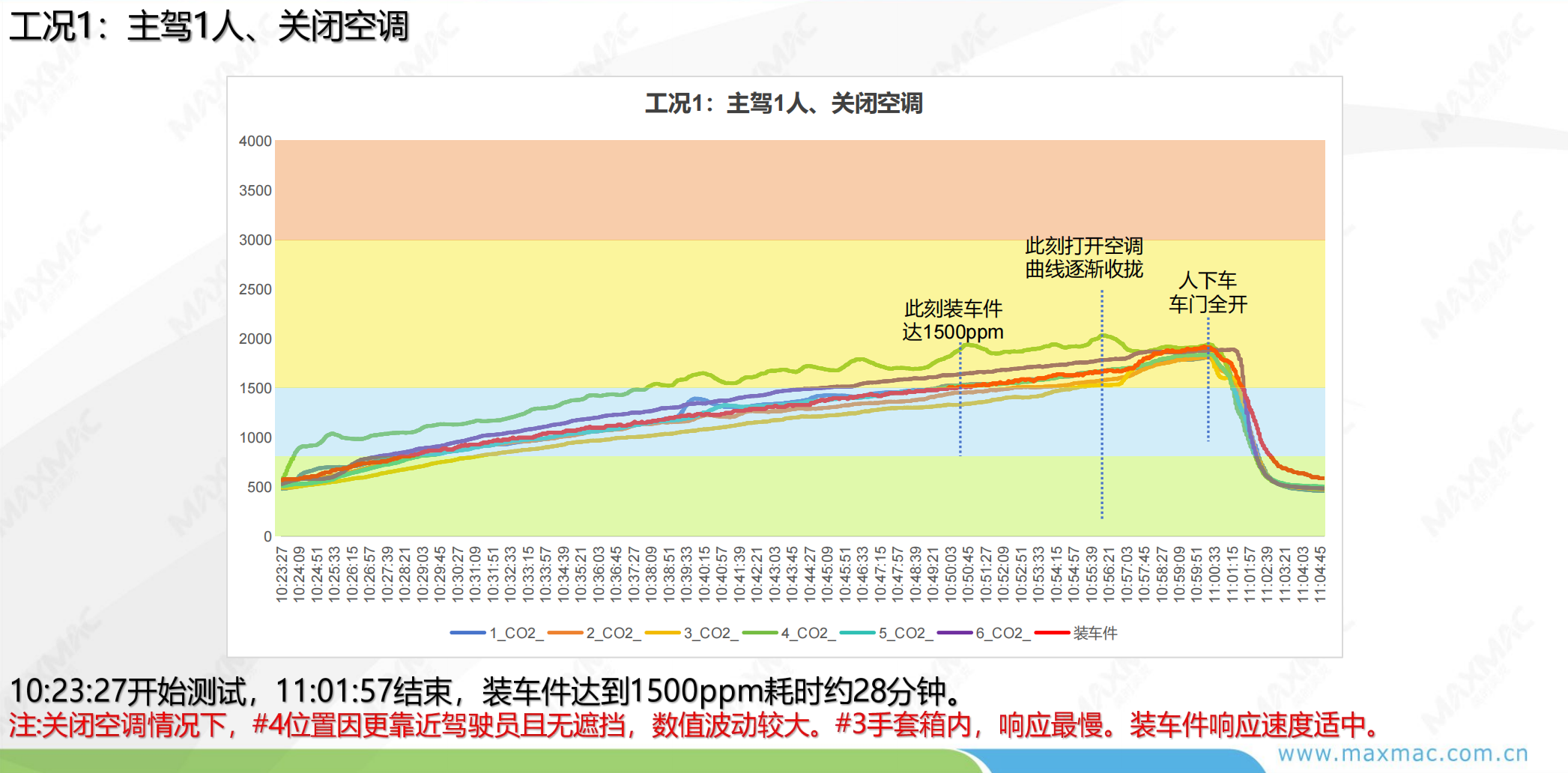
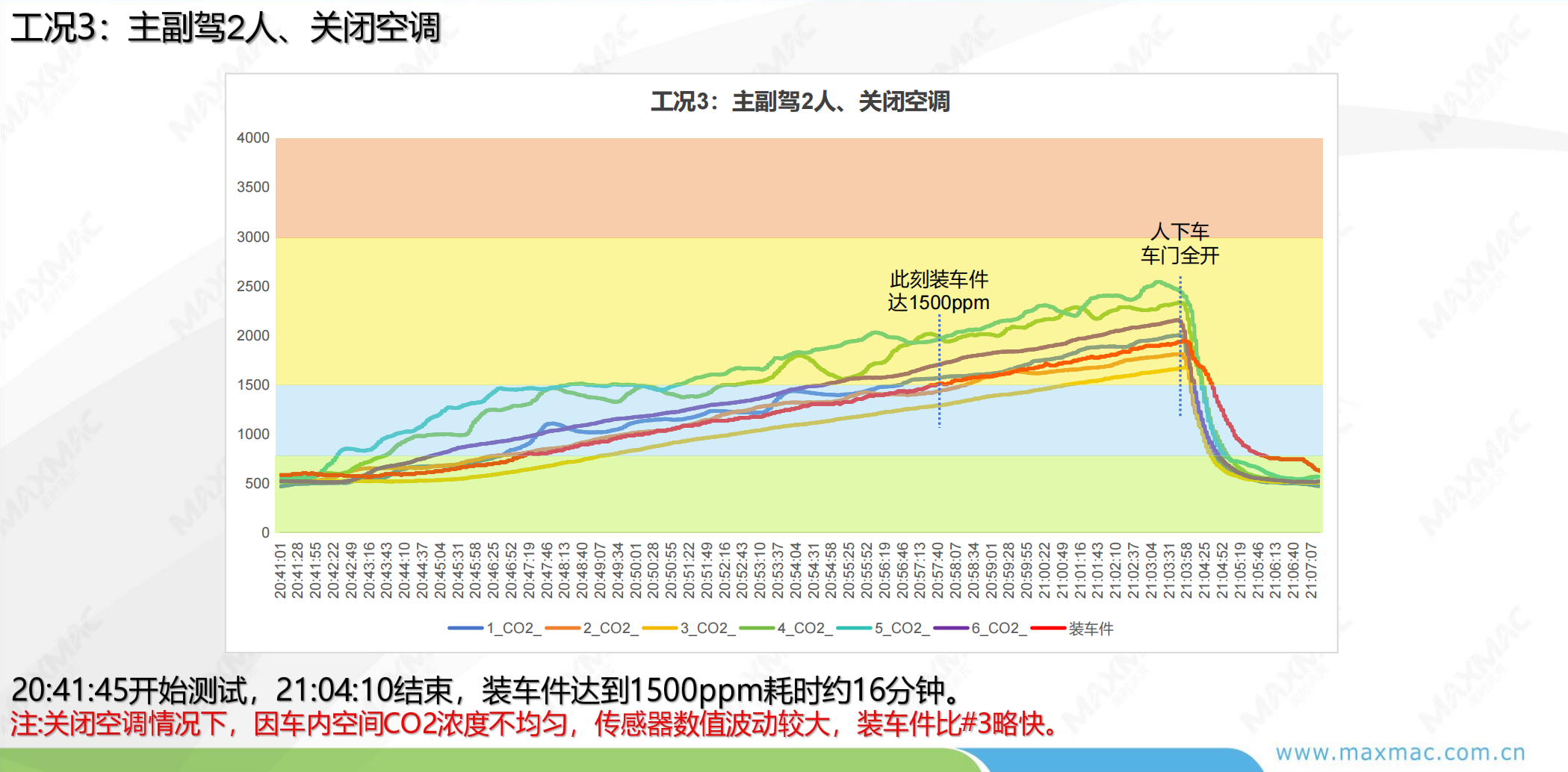
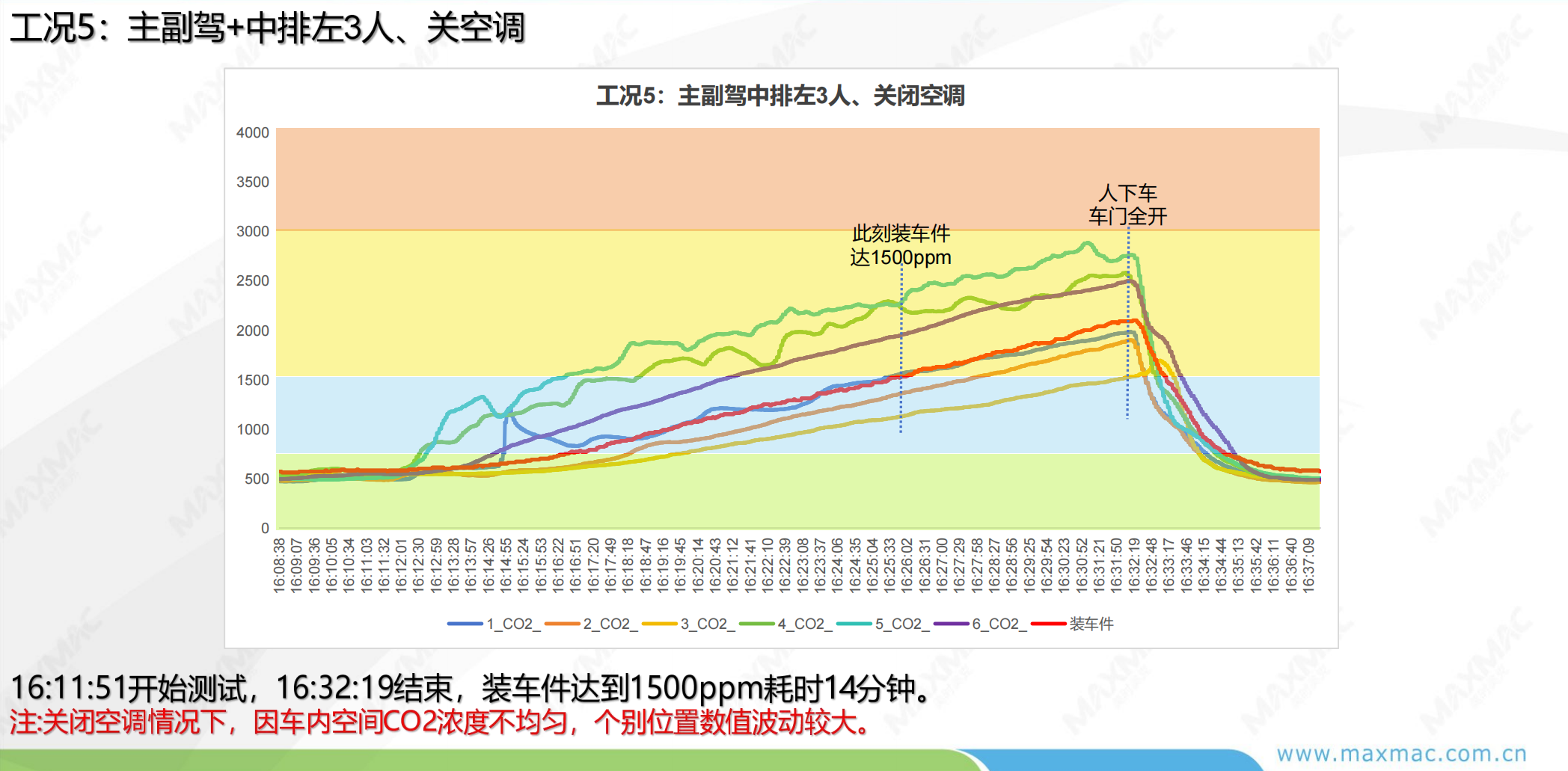
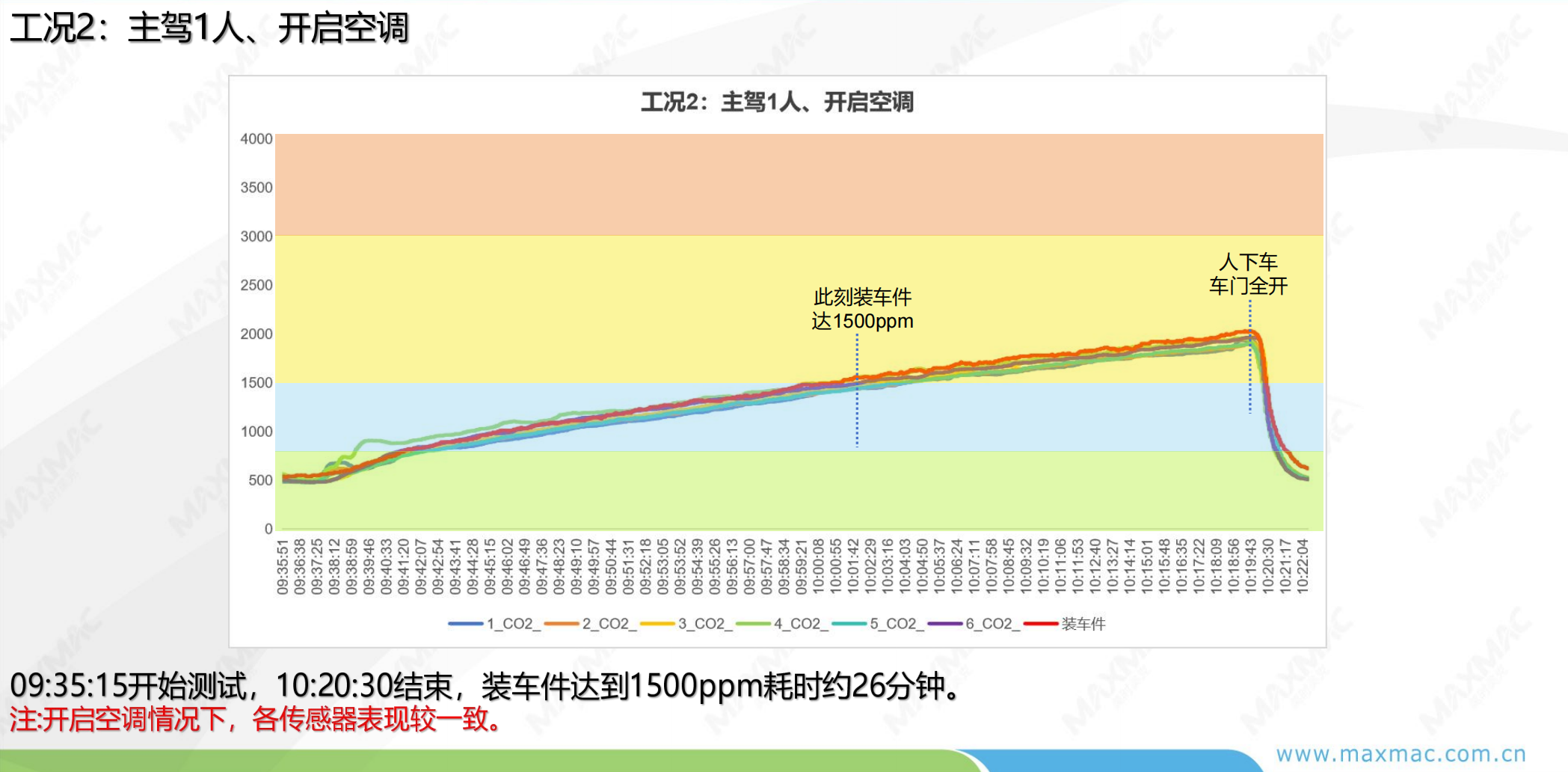
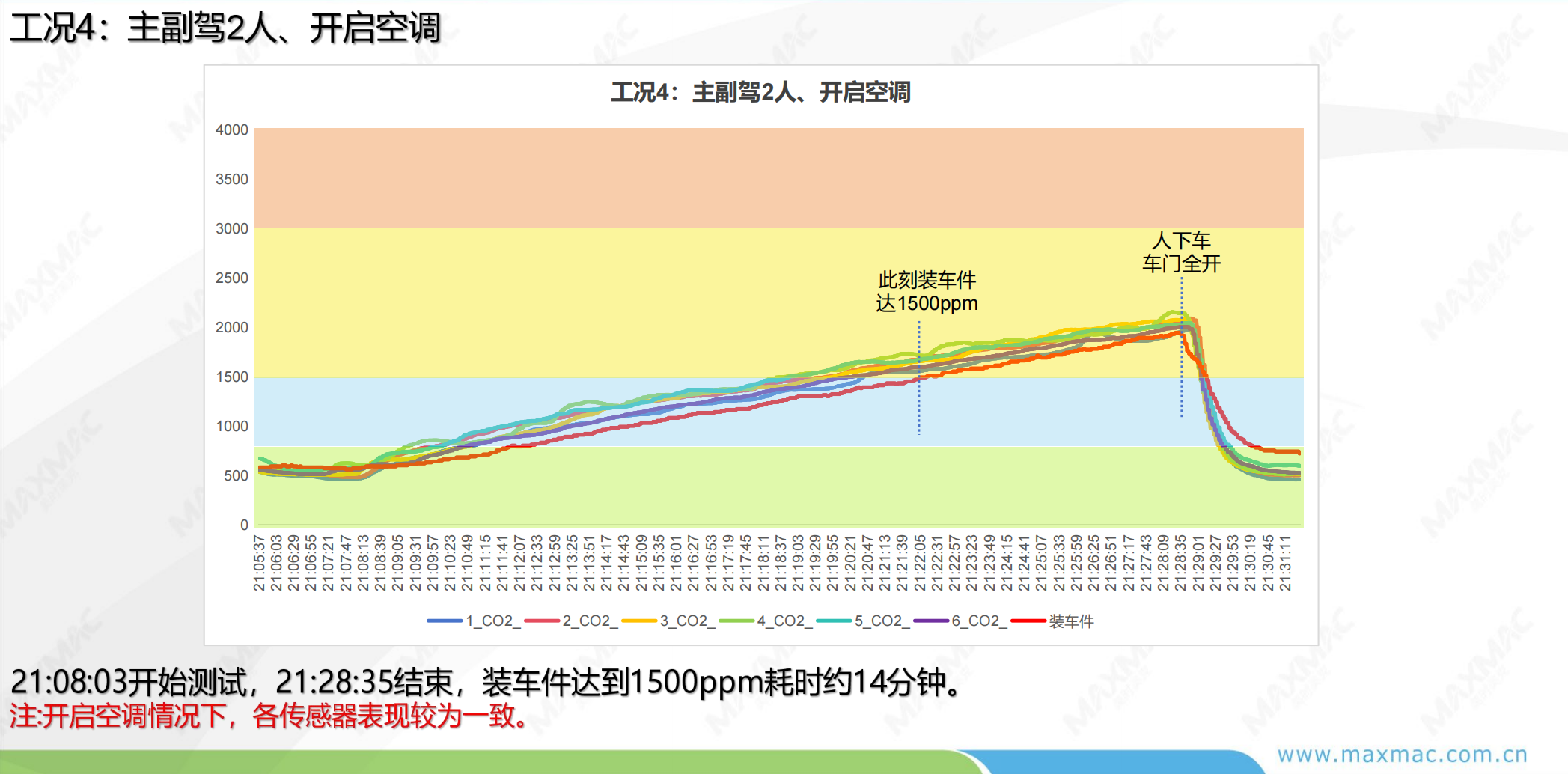
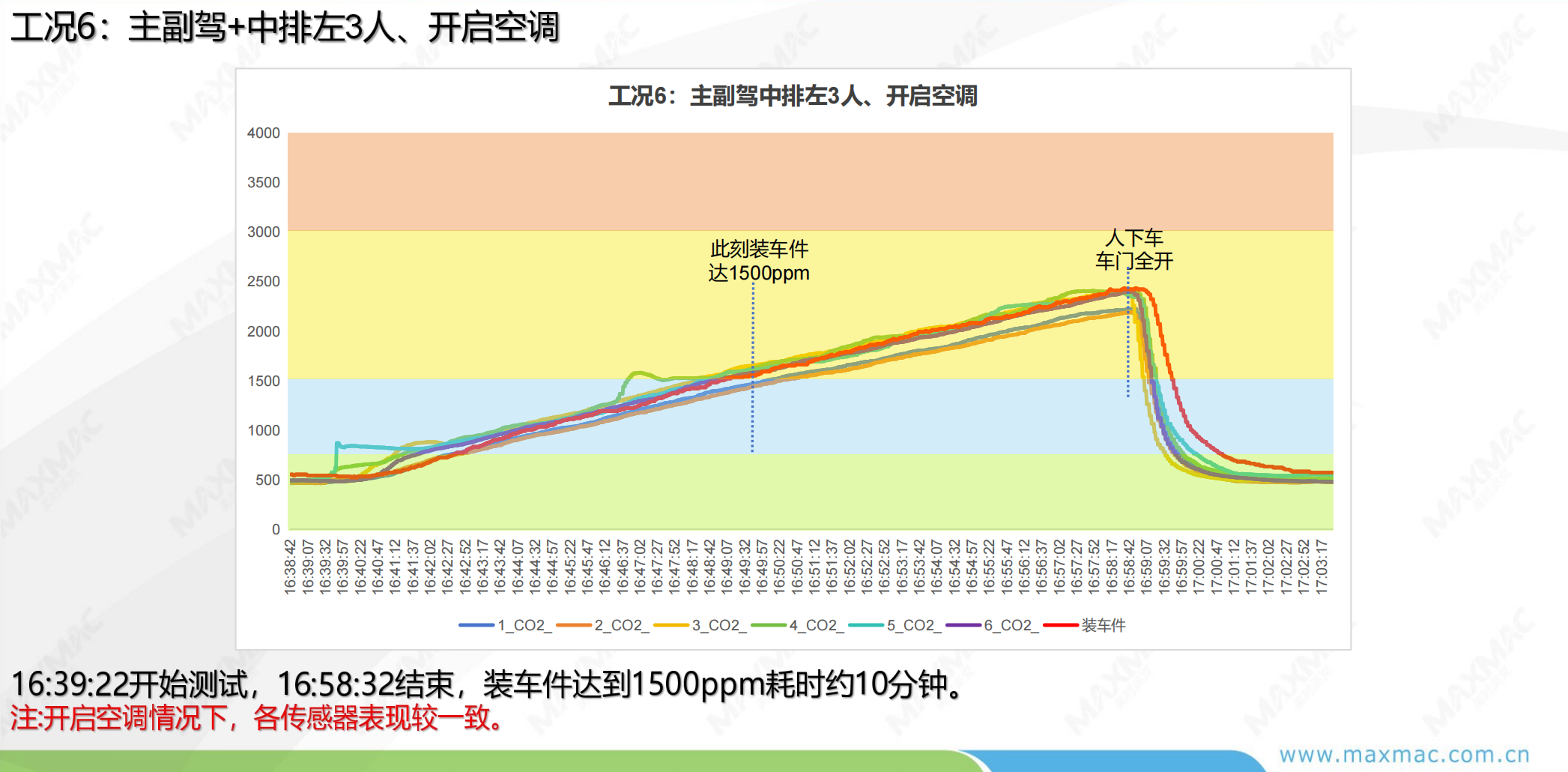
The test used 1500 ppm as the key observation point for a “poor” air-quality level. The table summarizes the time needed for the installed sensor to reach 1500 ppm. The important point is the pattern: occupant count, recirculation state and seating position all change the CO2 climb rate.
| Condition | Occupants and position | HVAC state | Time to 1500 ppm |
|---|---|---|---|
| 1 | 1 occupant, driver | Off | 28 min |
| 2 | 1 occupant, driver | On, recirculation level 1 | 26 min |
| 3 | 2 occupants, driver + front passenger | Off | 16 min |
| 4 | 2 occupants, driver + front passenger | On, recirculation level 1 | 14 min |
| 5 | 3 occupants, driver + front passenger + left second row | Off | 14 min |
| 6 | 3 occupants, driver + front passenger + left second row | On, recirculation level 1 | 10 min |
| 7 | 4 occupants, front row + second row | Off | 10 min |
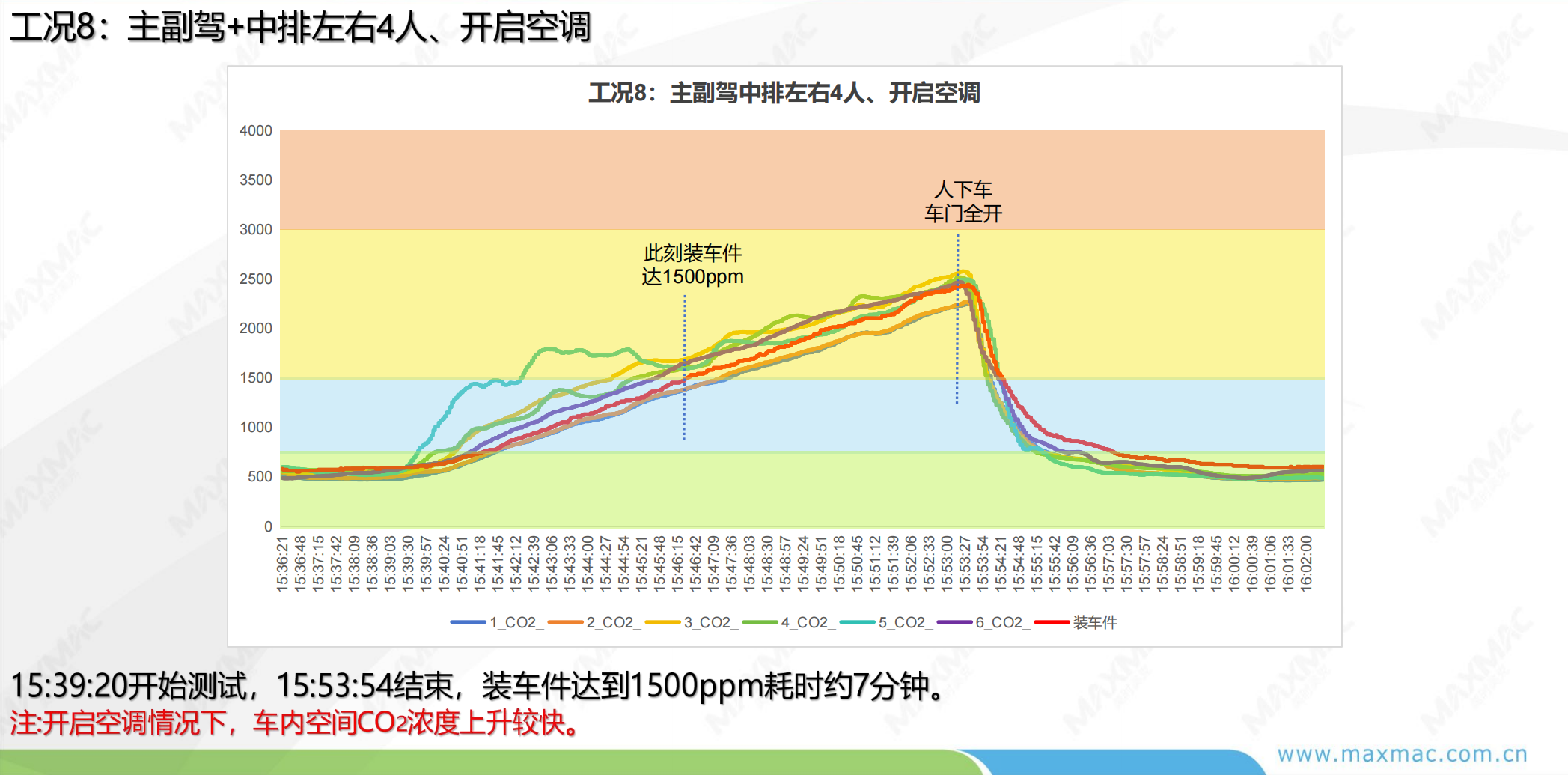
| 8 | 4 occupants, front row + second row | On, recirculation level 1 | 7 min |
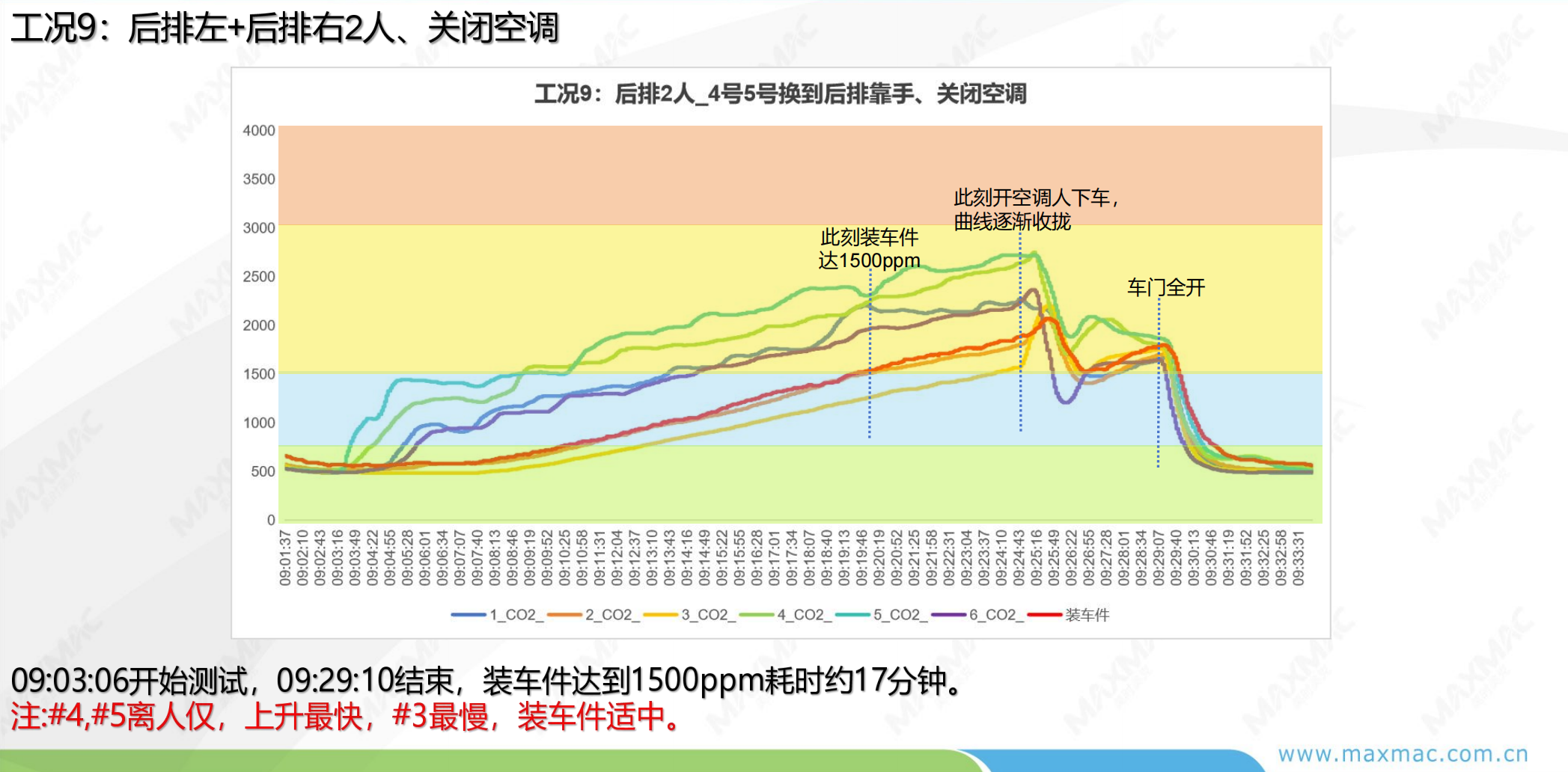
| 9 | 2 occupants, rear left + rear right | Off | 17 min |
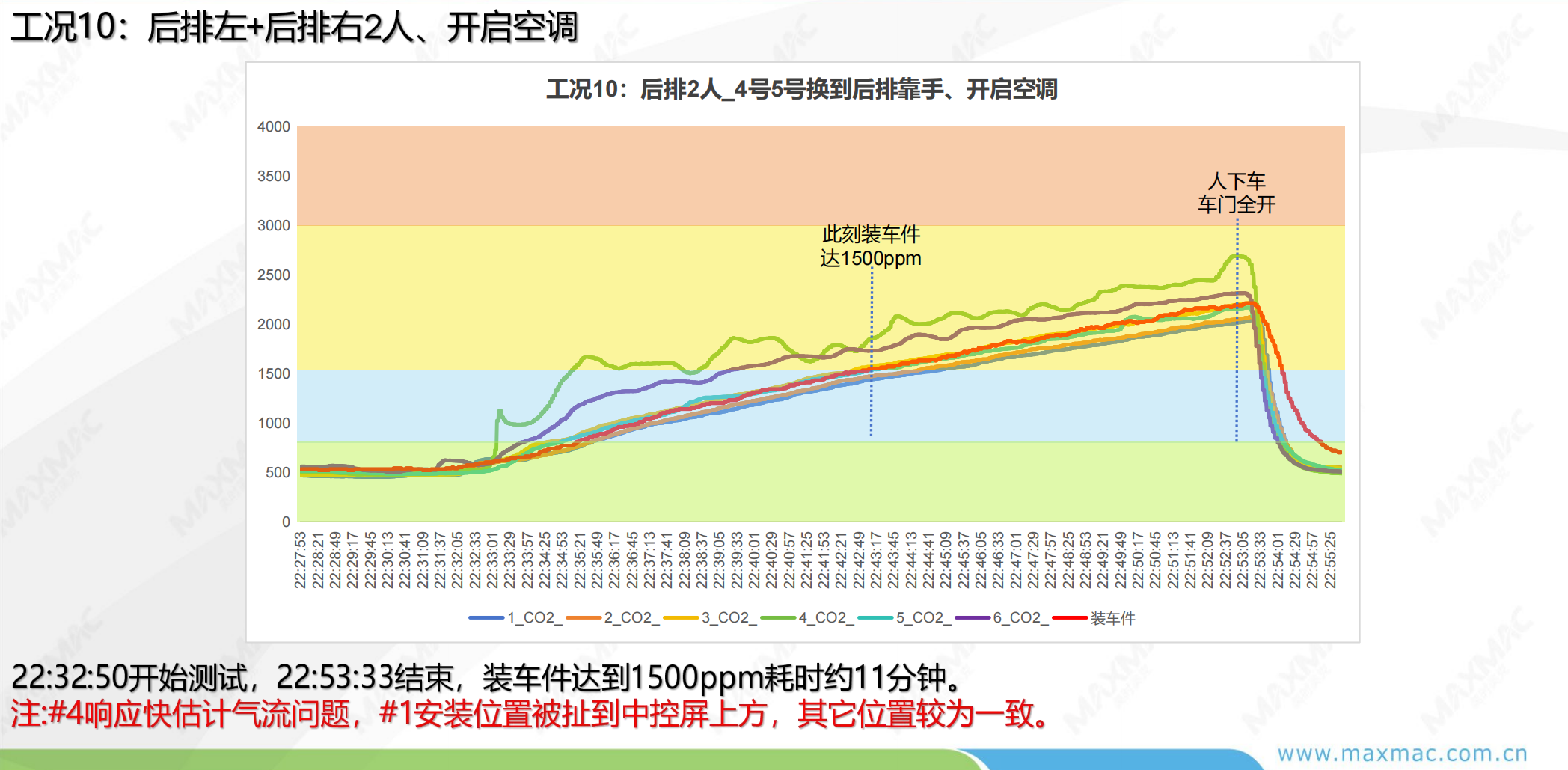
| 10 | 2 occupants, rear left + rear right | On, recirculation level 1 | 11 min |
Layer 1: More occupants make CO2 rise faster
Start with the HVAC-off comparison. With only the driver, the installed sensor reached 1500 ppm in about 28 minutes. With two front occupants, it shortened to about 16 minutes. With three occupants, it was about 14 minutes. With four occupants, it was about 10 minutes. The cabin is a limited volume, and every occupant is a continuous CO2 source.
Layer 2: With the same occupants, recirculation makes CO2 climb faster
The same seating layouts show the second pattern. After switching on HVAC recirculation level 1, the time to 1500 ppm became shorter across the group: 28 to 26 minutes for one occupant, 16 to 14 minutes for two, 14 to 10 minutes for three, and 10 to 7 minutes for four. Recirculation reduces fresh-air exchange, while the air duct mixes cabin air more quickly, so the installed position senses the overall rise sooner.
Layer 3: Rear passengers are more sensitive to ventilation changes
The rear-seat two-occupant comparison is especially important. With HVAC off, the installed sensor reached 1500 ppm in about 17 minutes. With recirculation level 1, it took about 11 minutes. Rear-seat air renewal depends more on cabin airflow organization, vent distribution and sensor placement. When rear-seat CO2 rises faster and freshness drops, passengers may feel stuffy, sleepy, dizzy or more prone to carsickness.
These three layers show why CO2 sensing needs to enter HVAC control. CO2 rise depends on occupant count, seating distribution, recirculation state and air mixing. During long recirculation, PM2.5 can still look good while freshness has already fallen. CO2 data allows the vehicle to decide when to keep pollution outside, when to add fresh air, and when to use smaller, shorter fresh-air pulses to balance air quality, comfort and energy use.
Why PM2.5 Alone Is Not Enough
A PM2.5 sensor tells the system whether particulate concentration is rising. It can judge outside particle pollution and verify purification performance. CO2 accumulation from occupants and the need for fresh air require a separate CO2 measurement.
With PM2.5 alone, a cabin air system can remain trapped in a pollution-isolation mindset: outside air is dirty, so close the intake; cabin particles are low, so the air must be fine. That misses freshness. Low PM2.5 means cleaner air from a particle perspective. Low CO2 means the cabin is less stuffy.
Fresh Air Also Has Boundaries
When CO2 rises, bringing in outside air seems like the direct answer. In congestion, tunnels and underground garages, however, outside air can be worse than cabin air. If the system opens the intake whenever CO2 rises, occupants may immediately smell exhaust or odor, and cabin PM2.5 may increase.
This is the practical difficulty of the recirculation paradox: closing the intake lowers particle and odor risk while CO2 rises; opening it lowers CO2 while outdoor pollutants may enter. Manual switching is rarely timely or consistent. The vehicle must balance air quality protection, comfort, energy use, defogging and driving safety.
CO2 Sensor Value: Turning Recirculation into Closed-Loop Control
A CO2 sensor provides real-time, actionable input to the HVAC controller. Without CO2 data, the system has to infer freshness from time, estimated occupants, HVAC mode or experience-based thresholds. With CO2 data, it can see whether the cabin is becoming stuffy, how fast CO2 is rising and whether fresh air is needed.
Our in-vehicle data also shows why real measurement matters. Even with the same number of occupants, HVAC state, air-mixing speed, seating position and sensor position all affect the CO2 curve. Real-time sensing lets HVAC adjust fresh-air strategy according to actual concentration, not a fixed timer.
| Cabin / outside state | System judgement | Possible HVAC strategy |
|---|---|---|
| High cabin CO2, good outside PM2.5/AQS | Fresh air is needed and outside air is acceptable | Increase fresh-air ratio or use short outside-air intake. |
| Low cabin CO2, high outside pollution | Cabin can continue to hold; outside air is not suitable | Maintain recirculation and strengthen filtration or purification. |
| High cabin CO2, high outside pollution | Fresh air is needed with limited intake opening | Use small-ratio, short-cycle fresh air with stronger filtration. |
| Winter heating with CO2 rise and fogging risk | Fresh air, defogging and energy must be balanced | Maintain minimum necessary fresh air with humidity and flap control. |
| Long trip with multiple occupants and fast CO2 rise | Occupant load is high; fixed timing is insufficient | Adjust fresh-air ratio and airflow based on CO2 slope. |
The Real Smart-Cabin Air Strategy: Fresh-Air Ratio Management
Future cabin air management will move from a simple recirculation/outside-air button to more granular fresh-air ratio management. The system adjusts outside-air intake based on cabin and outside air status, occupant load, HVAC targets and energy boundaries.
PM2.5 and AQS judge whether outside air is suitable. CO2 judges whether cabin fresh air is insufficient. Temperature, humidity and fogging data define comfort and safety boundaries. The HVAC controller combines these inputs to decide recirculation ratio, airflow, filtration strength and defogging strategy.
For OEMs, this is how healthy cabin functions become a real user experience. Users do not need to understand every sensor value. They need the vehicle to do the right thing at the right time: keep polluted air outside, add fresh air before the cabin feels stuffy, and balance defogging and energy in winter.
Three Typical Scenarios
Congestion and tunnels: recirculation needs a time boundary
Congestion and tunnels often trigger recirculation. PM2.5/AQS can tell the system to reduce outside-air intake. If the vehicle remains in low-speed traffic, CO2 rises with occupant breathing. A better strategy is to look for short, small-ratio fresh-air windows based on CO2 level and rise rate.
Family long trips: more people require real-time CO2 sensing
Family SUVs, MPVs and multi-occupant trips raise CO2 accumulation speed. Children, older passengers and rear-seat occupants rely more on automatic air maintenance. CO2 sensing lets HVAC adjust based on real breathing load.
In-car rest, camping and parked stays: CO2 becomes an air boundary
EV parked HVAC, camping and rest modes make long in-cabin stays common. The longer people remain inside, the more important CO2 sensing becomes. Users expect the vehicle to maintain air quietly and steadily, rather than asking them to switch modes repeatedly.
Our Product Value: Turning the Paradox into a Controllable Strategy
A single sensor cannot cover every risk. PM2.5 sensors handle particles. CO2 sensors handle fresh-air demand. AQS/VOC sensors identify external pollution gases. Temperature and humidity define comfort and defogging boundaries. When these inputs enter one HVAC control logic, the vehicle can balance pollution protection, CO2 reduction, energy use and comfort.
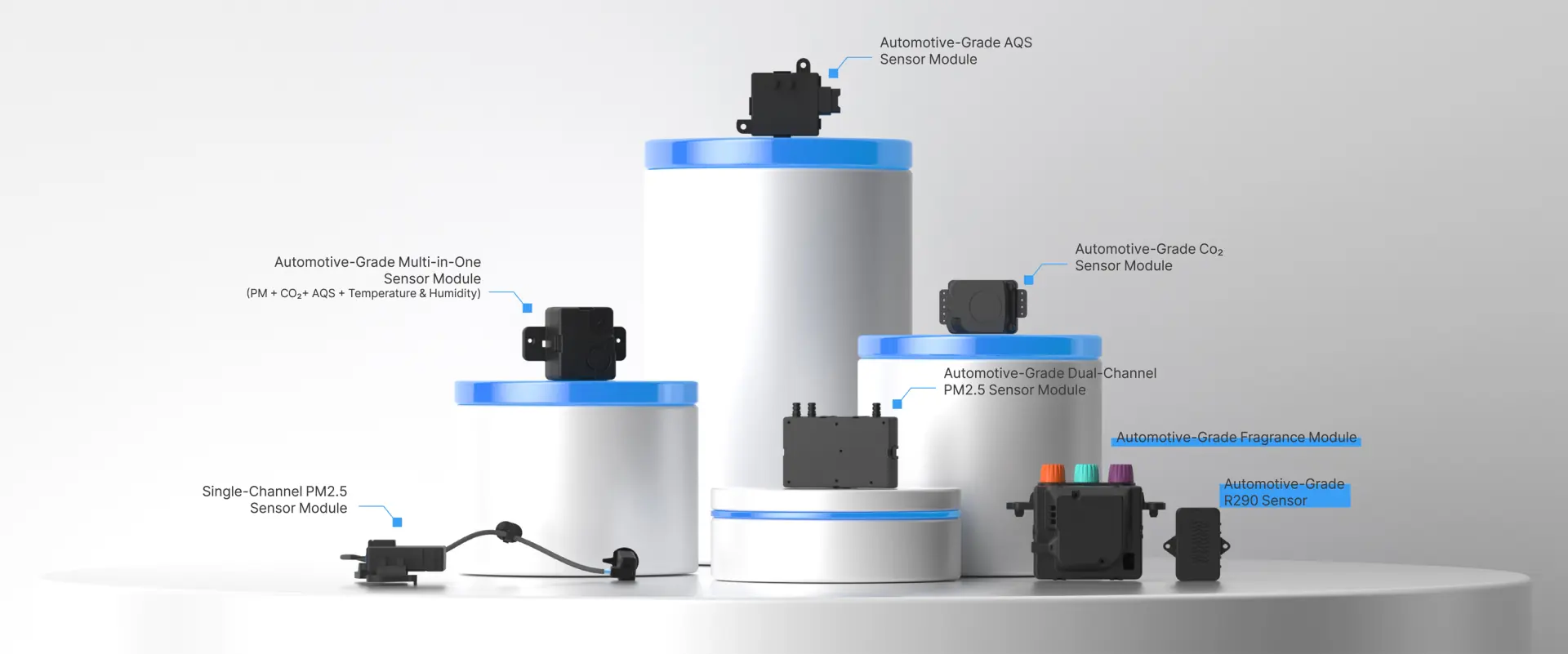
We provide CO2, PM2.5, AQS and multi-in-one air-quality sensor solutions for smart cabins and automotive HVAC systems, supporting OEM fresh-air ratio management, purification linkage and healthy-cabin scenario design.
For users, the final value of a CO2 sensor is a more stable cabin air state. The vehicle knows when to keep outdoor pollution out, when to add fresh air and when to maintain only the minimum fresh-air amount. The recirculation paradox becomes an automatic, measurable and continuously optimized control strategy.
Conclusion
A cabin with PM2.5 sensing alone is incomplete. PM2.5 tells the vehicle whether air is clean from a particle perspective; it does not tell whether the air is fresh. Recirculation blocks outdoor pollution and traps exhaled CO2. Outside air lowers CO2 and may introduce pollution. CO2 sensing lets the smart cabin see that conflict and turn it into an HVAC strategy.
As healthy cabins become real experiences rather than feature labels, CO2 sensors will move from premium options toward core HVAC closed-loop inputs. They fill the part PM2.5 cannot see: whether cabin air is still fresh enough.
Sources
CO2 accumulation and test conclusions in this article are based on our internal in-vehicle comparison test. Product-value sections are application interpretations based on the test results and product direction.
- Internal test report: CO2 Sensor In-Vehicle Comparison Test. Test vehicle; test date: 2026-02-27; test conditions: 1-4 occupants, front/rear seating positions, HVAC off versus recirculation level 1.
_美图抠图12-12-2025.webp)