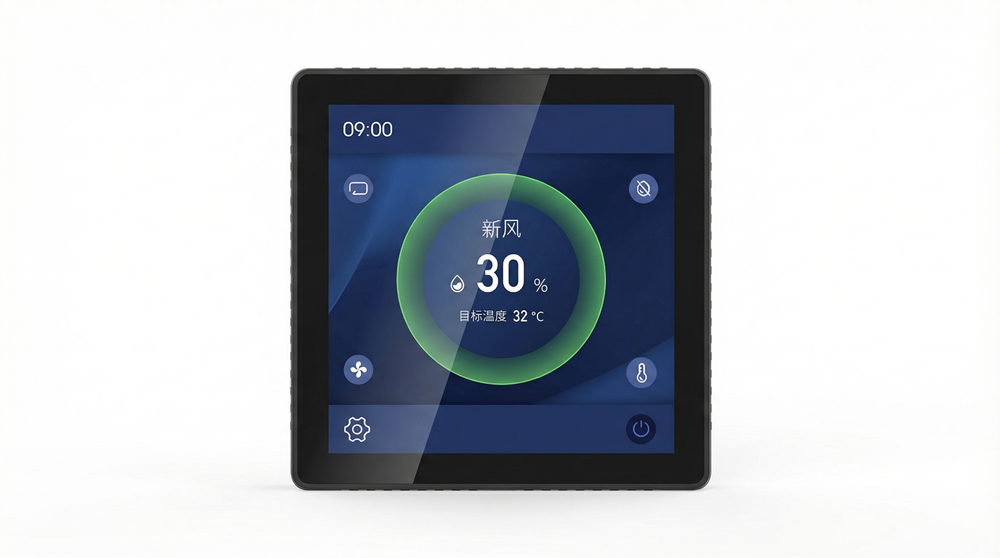
Over the past few years, the focus of the air sensor industry has shifted from whether air can be measured to whether it can be measured accurately, deployed correctly, integrated into control systems, and maintained with long-term stability. By 2026, the clearest change is not the replacement of one sensing principle by another, but the simultaneous rise in demand for scenario-based sensing, regulatory alignment, closed-loop system integration, and long-term operational reliability.[3][4]
On the demand side, indoor air quality is no longer a peripheral concern. The U.S. EPA notes that people spend approximately 90% of their time indoors, while concentrations of some indoor pollutants can often reach 2 to 5 times typical outdoor levels. This means air sensors are no longer simply auxiliary environmental monitoring devices. They are increasingly becoming part of the core infrastructure in homes, office buildings, schools, hospitals, hotels, and HVAC control systems.[1][2]
1. Industry Overview: Six High-Confidence Directions for the Air Sensor Industry in 2026
Based on current publicly available information, the air sensor industry in 2026 is moving in at least six highly certain directions: institutionalized IAQ monitoring, integrated building control, rapid growth in refrigerant leak detection, more professional interpretation of CO₂ monitoring, continued tightening of environmental standards in China, and a competitive shift from discrete devices toward platform-based scenario capabilities. Among these, building IAQ and refrigerant leak detection stand out as the two most commercially important tracks to watch.[3][5][6][7]
| Dimension | Key Signal | Data / Conclusion | Industry Implication |
|---|---|---|---|
| Indoor Air Exposure | High share of time spent indoors, with pollutant levels often exceeding outdoor conditions | EPA: about 90% of time spent indoors; some indoor pollutants reach 2–5× typical outdoor levels[1] | IAQ monitoring is moving from optional to essential |
| EU Building Energy Use | Building and HVAC systems are increasingly tied to energy-saving objectives | EU buildings account for about 40% of energy use and 50% of gas consumption; around 80% of household energy goes to heating, cooling, and hot water[5] | Air sensors will increasingly be integrated into building control chains |
| Third-Party Market Forecasts | Sustained growth in IAQ / AQMS | FBI: IAQ monitoring systems from USD 2.33B in 2025 to USD 4.32B in 2034; MarketsandMarkets: AQMS from USD 4.9B in 2023 to USD 6.9B in 2028, CAGR 7.0%[8][9] | This is not a short-term theme but a mid-term structural growth market |
| U.S. Refrigerant Regulations | Leak repair and automatic detection requirements are expanding | EPA final rule: equipment with 15 lbs or more and HFCs or substitutes with GWP > 53 falls under relevant requirements; some systems with 1,500 lbs or more require automatic leak detection[6] | A2L / refrigerant leak sensing is becoming an important source of incremental demand |
| China Environmental Standards | Long-term PM2.5 targets continue to tighten | MEE: national annual PM2.5 concentration fell from 68 μg/m³ in 2013 to 28 μg/m³ in 2025; second phase of the new standard tightens the annual Class II PM2.5 limit to 25 μg/m³ from 2031[10][11] | Demand for finer-particle, higher-frequency, and more automated monitoring will increase |
2. First Major Track: Building and IAQ Demand Is Moving from Optional Specification to Institutionalized Requirement

One of the most important developments in 2026 is that IAQ monitoring on the building side is being more clearly incorporated into frameworks for building energy performance and indoor environmental quality. The European Commission’s official information on building energy performance notes that buildings account for around 40% of the EU’s energy consumption and approximately 50% of natural gas consumption, while households in the EU use around 80% of their energy for heating, cooling, and domestic hot water. For the building sector, this means indoor air quality is no longer only a comfort metric. It is increasingly tied to energy efficiency, HVAC control, and the management of technical building systems.[5]
This directly changes how air sensor products are defined. What the future building market requires is no longer just a standalone device that displays a value, but a sensing node that can enter the building control chain, operate reliably over time, and support calibration and maintenance. ASHRAE’s 2025 Indoor Carbon Dioxide position document emphasizes that sensor performance, installation location, and calibration are all critical to the correct interpretation of indoor CO₂ data. In other words, future competition will not only be about sensing principles, but also about delivery capability and system integration.[3]
| Building-Side Trend | Public Basis | Derived Product Requirement |
|---|---|---|
| IAQ linked to energy efficiency | EU building energy framework highlights the relationship between buildings, technical systems, and indoor environmental quality[5] | Sensors must be able to integrate into HVAC / BMS / fresh air control chains |
| More professional interpretation of CO₂ | ASHRAE emphasizes performance, placement, and calibration[3] | Sensors must deliver values that are interpretable, verifiable, and maintainable |
| Placement science is becoming more important | EPA has published guidance on air sensor siting and installation[4] | Room-level, zone-level, wall-mounted, and node-based integration solutions will hold greater value |
3. Second Major Track: The IAQ Market Is Still Growing, but the Growth Engine Is Shifting from Readouts to Closed-Loop Control
Publicly available market research summaries suggest that air quality monitoring-related markets continue to grow at a moderate pace. Fortune Business Insights projects that the global indoor air quality monitoring system market will grow from USD 2.33 billion in 2025 to USD 4.32 billion in 2034. MarketsandMarkets estimates that the broader air quality monitoring system market will increase from USD 4.9 billion in 2023 to USD 6.9 billion in 2028, with a 7.0% CAGR. These two sets of figures come from different third-party commercial research institutions and use different methodologies, but the direction is consistent: the industry has not entered a stagnant phase.[8][9]
| Market Scope | Starting Size | Target Size | CAGR | Notes |
|---|---|---|---|---|
| Indoor Air Quality Monitoring System (Fortune Business Insights) | 2025: USD 2.33B[8] | 2034: USD 4.32B[8] | 2026–2034 CAGR of 7.27% stated on the page[8] | More focused on indoor air quality monitoring systems |
| Air Quality Monitoring System (MarketsandMarkets) | 2023: USD 4.9B[9] | 2028: USD 6.9B[9] | 7.0%[9] | Broader definition covering a wider AQMS market |
However, the real change in the industry lies not in whether a sensor is installed, but in whether the sensor can become part of the control logic. EPA guidance on air sensor siting and installation emphasizes that sensor location affects the representativeness of the data, and that deployment should account for site conditions while avoiding abnormal airflow, localized pollution sources, and unrepresentative mounting points. For the industry, this means future high-value products will not simply be those that can measure, but those that can measure in the right place and trigger fresh air, HVAC, purification, or alarm systems accordingly.[4]
4. Third Major Track: Regulations Are Turning Refrigerant Leak Sensing into a New Growth Engine

If IAQ reflects a “health + energy efficiency” logic, refrigerant leak detection represents a regulation-driven and engineering-critical logic. The EPA’s 2024 final rule published in the U.S. Federal Register shows that leak repair requirements have been expanded to apply to equipment with a refrigerant charge of 15 lbs or more, where the refrigerant is an HFC or substitute with a GWP above 53. In addition, some systems with charges of 1,500 lbs or more are also subject to requirements for automatic leak detection systems.[6]
This shift is already visible in corporate disclosures. Sensirion’s 2025 interim results press release states that first-half growth was driven primarily by the continued ramp-up of A2L leakage sensors for U.S. air conditioning systems. Its full-year 2025 results further note that one of the largest single growth drivers in new business was the expansion of A2L leak sensor business in U.S. air conditioning systems. For industry observers, this type of disclosure is closer to real order structures than broad market projections and indicates that refrigerant / A2L leak detection has moved from a “reserve opportunity” into a phase of meaningful volume expansion.[7][12]
| Regulatory / Corporate Signal | Key Content | Industry Direction |
|---|---|---|
| EPA Final Rule | Equipment with 15 lbs or more and HFCs / substitutes with GWP > 53 falls under the relevant leak repair framework; some systems with 1,500 lbs or more require automatic leak detection[6] | Refrigerant leak detection is moving from optional to compliance-driven |
| Sensirion 2025H1 | Growth mainly came from the ramp-up of A2L leak sensors in U.S. HVAC systems[7] | Regulatory demand has already translated into real orders |
| Sensirion Full-Year 2025 | One of the largest single growth drivers in 2025 was the expansion of A2L leak sensing business for U.S. air conditioning systems[12] | This track has continuity and is not a one-quarter anomaly |
5. Fourth Major Track: CO₂ Remains a Core Indicator, but Industry Understanding Is Becoming More Sophisticated
CO₂ will remain one of the core indicators in the air sensor industry in 2026, but the industry’s understanding of it has become more sophisticated than in the past. ASHRAE’s 2025 position document notes that although a 1000 ppmv CO₂ value appeared in the 1989 version of Standard 62, it was removed in later versions. In other words, CO₂ is more appropriately understood as a proxy for ventilation adequacy, occupant-related emissions, and demand-controlled ventilation, rather than as a universal “health threshold”.[3]
This has two important consequences for the industry. First, CO₂ sensors will not become marginal. On the contrary, because they are interpretable, controllable, and linkable to systems, they will remain central. Second, market competition will shift from whether CO₂ data is available to where the data is collected, how accurate it is, and whether it can drive demand-controlled ventilation. As a result, the highest-value offerings in the future will not simply be display panels showing a number, but CO₂ monitoring solutions that function as space-level nodes within building or room-level closed-loop control systems.[3][4]
6. Fifth Major Track: In China, the Key Variable Is Shifting from Environmental Improvement to Standard Upgrades and More Granular Monitoring
One of the clearest signals in the China market in 2026 is the continued tightening of standards. In its February 2026 press briefing, the Ministry of Ecology and Environment stated that the national average annual PM2.5 concentration had fallen from 68 μg/m³ in 2013 to 28 μg/m³ in 2025. At the same time, draft consultation materials and implementation information indicate that under the revised second phase, the annual Class II PM2.5 limit will tighten to 25 μg/m³ from 2031.[10][11]
The significance of this shift goes beyond upgrades to environmental monitoring stations. It reflects rising demand for monitoring capabilities that are more granular, more frequent, and more automated. In January 2026, the Ministry of Ecology and Environment also approved standard HJ 1438—2026 for automatic monitoring systems measuring organic carbon and elemental carbon in PM2.5, effective from April 1, 2026. This indicates that the environmental monitoring equipment system continues to move toward greater automation, standardization, and precision.[13]
| China Market Signal | Public Data / Standard | Derived Implication |
|---|---|---|
| Continued progress in ambient air governance | Annual PM2.5 concentration: 68 in 2013 → 28 μg/m³ in 2025[10] | The industry is entering a more refined monitoring stage, beyond broad pollution control |
| Ambient air standards continue to tighten | Under GB 3095—2026 second phase, the annual Class II PM2.5 limit becomes 25 μg/m³ from 2031[11] | Higher requirements will be placed on data quality and long-term monitoring stability |
| Expansion of automatic monitoring systems | HJ 1438—2026 takes effect on 2026-04-01[13] | Source apportionment and more segmented particulate monitoring capabilities are becoming more important |
| Foundation for indoor air quality standards | In the public text of GB/T 18883-2022, the 1-hour average CO₂ limit is 0.10% (1000 ppm)[14] | Health-related indoor applications still have clear baseline standards to reference |
7. Sixth Major Track: Future Winners May Not Be Those with the Most Advanced Principle, but Those with the Most Complete Scenario Capability
By 2026, it is increasingly difficult for the industry to rely on a single sensing principle to tell the full story. Different application scenarios are evaluated by entirely different criteria. In buildings and fresh air systems, the focus is on CO₂, temperature and humidity, particulate matter, VOCs, multi-parameter integration, and control linkage. In refrigerant leak detection, the focus is on gas selectivity, false alarm rate, regulatory alignment, and safety. In environmental monitoring, the priority is long-term stability, calibration, data traceability, and networked deployment.[3][4][13]
For this reason, the real dividing line in the air sensor industry in 2026 is not who can make a sensor, but who can turn sensors into scenario-based system capabilities. Based on public trends, the more competitive companies tend to possess four capabilities at the same time: scalable hardware manufacturing, correct deployment capability, control-system integration, and rapid product adaptation under changing regulations. This means the industry is gradually shifting from comparisons of discrete devices to competition in platforms, modules, and solution capabilities.[4][6][7]
8. Conclusion: In 2026, the Air Sensor Industry Is Defined by Systemic Growth Rather Than Isolated Hotspots
Overall, the air sensor industry in 2026 is not being driven by a single short-term trend. It is a market shaped by the combined forces of health needs, regulatory change, energy-efficiency goals, and engineering delivery. The indoor air quality market continues to expand, building IAQ monitoring is becoming more institutionalized, refrigerant leak sensing is gaining momentum under regulatory pressure, and China’s environmental standards and automatic monitoring systems are continuing to advance.[5][6][8][10][13]
For companies, the real point of focus is no longer only what a sensor can measure, but whether it can be deployed in the right place, deliver the right level of accuracy, integrate into systems in the right way, and continue to create value as regulations and standards evolve. That is what will determine whether a company remains in device-level competition or moves into platform- and system-level competition.[3][4]
References
Note: The links below are listed in the order they appear in the article. This article prioritizes official institutions, standards organizations, and corporate public disclosures. Market size figures are drawn from publicly accessible third-party research summaries and should be understood in light of differences in methodology and market scope.
- EPA, The Inside Story: A Guide to Indoor Air Quality. https://www.epa.gov/indoor-air-quality-iaq/inside-story-guide-indoor-air-quality
- EPA, Indoor Air Quality (IAQ). https://www.epa.gov/indoor-air-quality-iaq
- ASHRAE, Position Document on Indoor Carbon Dioxide (approved 2025-02-12 revision). https://www.ashrae.org/file%20library/about/position%20documents/pd-on-indoor-carbon-dioxide-english.pdf
- EPA, Guide for Siting and Installing Air Sensors. https://www.epa.gov/air-sensor-toolbox/guide-siting-and-installing-air-sensors
- European Commission, Energy Performance of Buildings Directive. https://energy.ec.europa.eu/topics/energy-efficiency/energy-performance-buildings/energy-performance-buildings-directive_en
- Federal Register / EPA, Phasedown of Hydrofluorocarbons: Management of Certain Hydrofluorocarbons and Substitutes Under the American Innovation and Manufacturing Act of 2020, 2024 final rule. https://www.federalregister.gov/documents/2024/10/11/2024-21967/phasedown-of-hydrofluorocarbons-management-of-certain-hydrofluorocarbons-and-substitutes-under-the
- Sensirion, Strong growth and significantly higher profitability in the first half of 2025. https://sensirion.com/company/news/press-releases-and-news/article/strong-growth-and-significantly-higher-profitability-in-the-first-half-of-2025-outlook-for-the-full-year-confirmed
- Fortune Business Insights, Indoor Air Quality Monitoring System Market Size, Share [2034]. https://www.fortunebusinessinsights.com/indoor-air-quality-monitoring-system-market-113784
- MarketsandMarkets, Air Quality Monitoring System Market / press release summary. https://www.marketsandmarkets.com/PressReleases/air-quality-monitoring-equipment.asp
- Ministry of Ecology and Environment of China, Transcript of the February Regular Press Conference, 2026-02-28. https://www.mee.gov.cn/ywdt/xwfb/202602/t20260228_1145067.shtml
-
Ministry of Ecology and Environment of China, Explanatory Notes / Public Documentation for the Draft Revision of Ambient Air Quality Standard (GB 3095—2012), along with related implementation information.
https://www.mee.gov.cn/xxgk2018/xxgk/xxgk06/202512/W020251216596856783730.pdf
https://www.mee.gov.cn/ywgz/fgbz/bz/ - Sensirion, Strong revenue and profitability growth amid challenging markets, underlining Sensirion’s resilience and reinforced momentum for long-term strategic growth, 2026-03-10. https://sensirion.com/company/news/press-releases-and-news/article/strong-revenue-and-profitability-growth-amid-challenging-markets-underlining-sensirions-resilience-reinforced-momentum-for-longterm-strategic-growth
- Ministry of Ecology and Environment of China, Technical Requirements and Test Methods for Automatic Monitoring Systems for Organic Carbon and Elemental Carbon in Ambient PM2.5 (HJ 1438—2026). https://www.mee.gov.cn/ywgz/fgbz/bz/bzwb/dqhjbh/xgbz/202601/t20260129_1142940.shtml
- GB/T 18883-2022 Indoor Air Quality Standard, public text. https://www.ndcpa.gov.cn/jbkzzx/c100201/1666357812062392320/ZgwODgwF.pdf